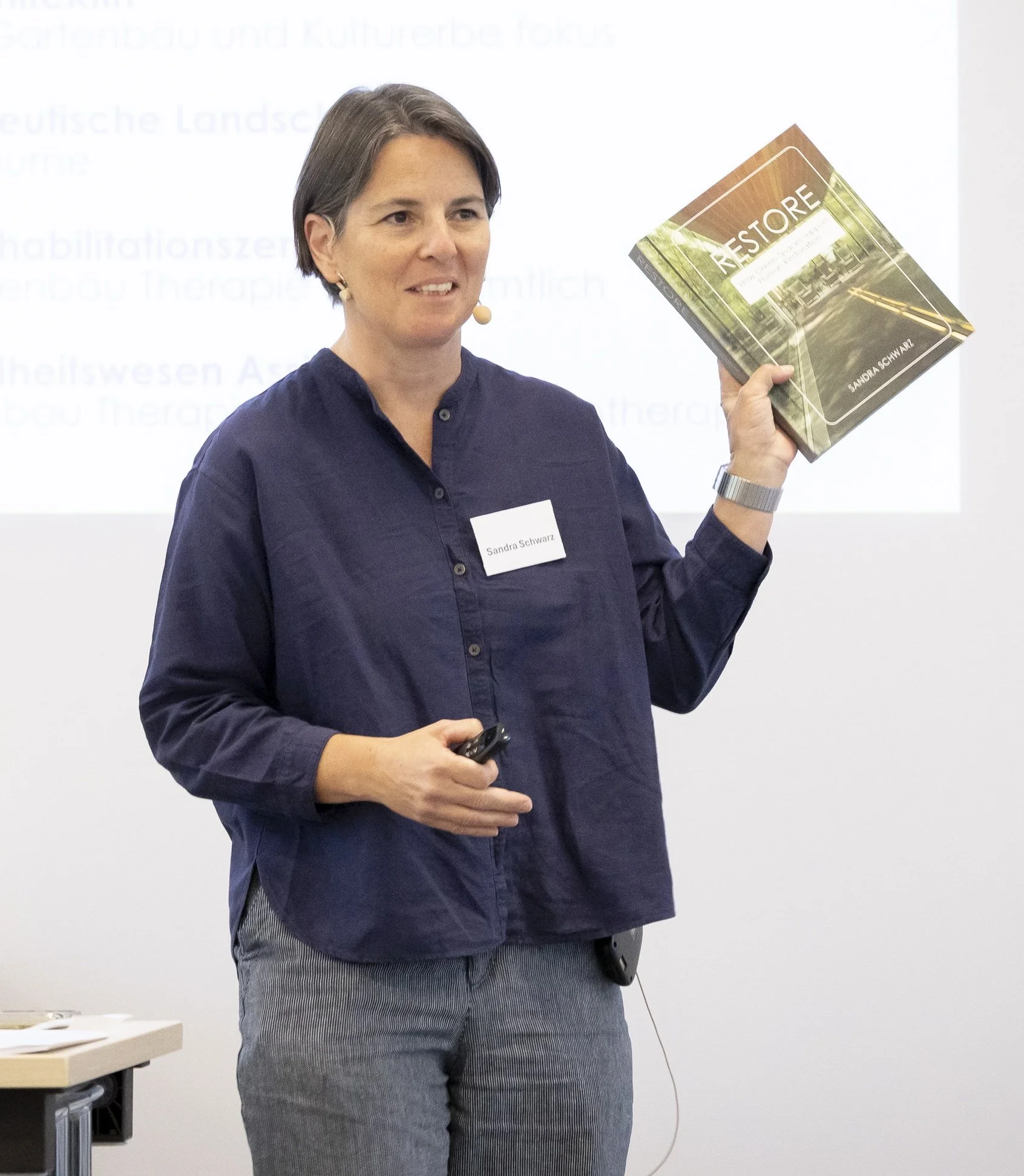
Gardener Folks - Sandra Schwarz
Sandra and her book RESTORE during a recent presentation
I hope you’re enjoying your gardening and that you’re ready for your next dose of Gardener Folks inspiration.
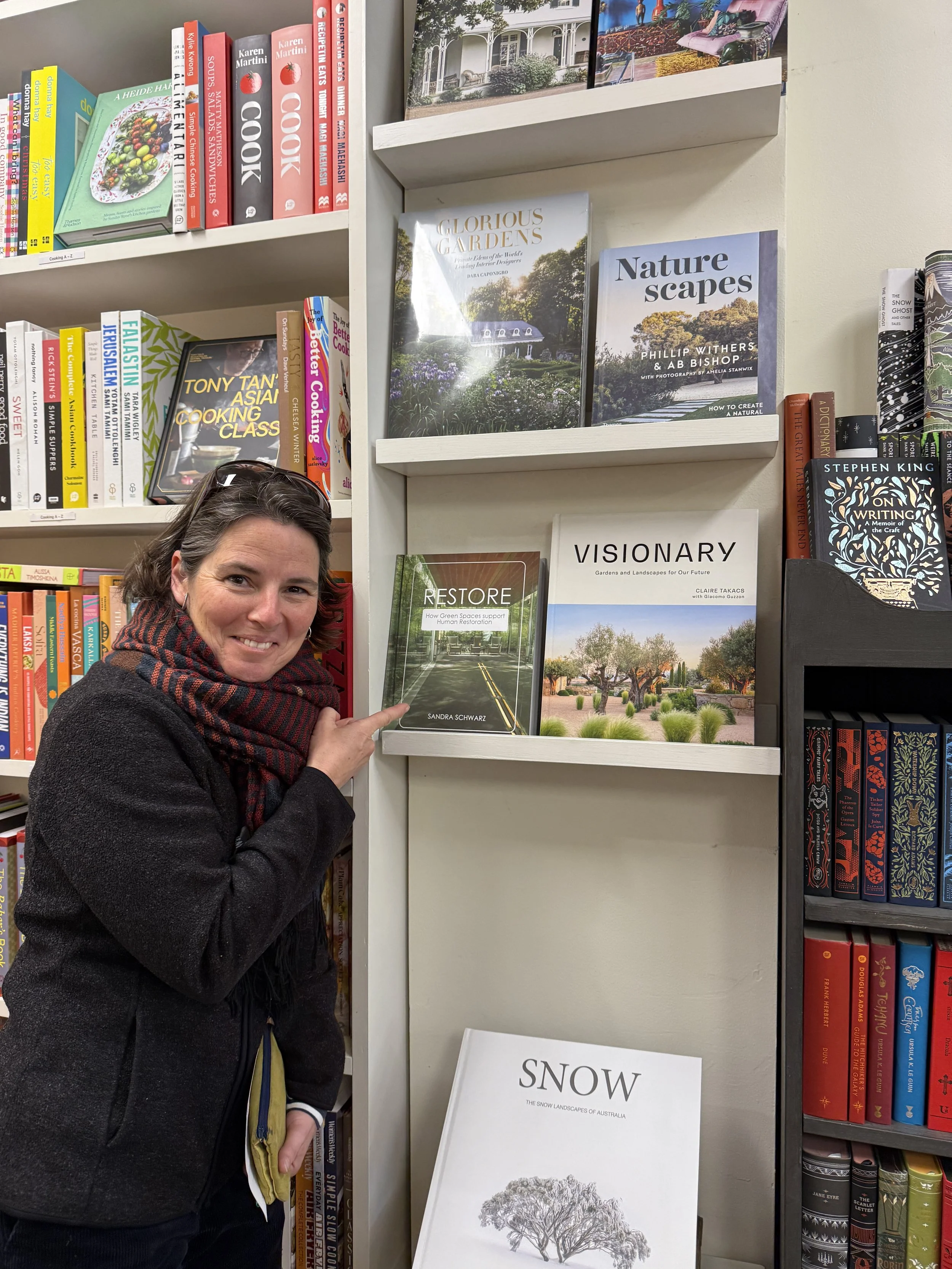
Let me introduce you to Sandra Schwarz who is someone I’ve had the fortune of knowing for a few years now. Sandra has a wonderful approach to life, embracing it with an attitude of “Why Not?! Just give it a go” and that is evident in her richness of studies and careers. She is a dedicated learner, seeker of knowledge and is passionate about sharing about the restorative value and benefits of gardens and nature for humans as evidenced by her recently authored book RESTORE, which is a valuable resource for all of us interested in gardens. We get to chat regularly when she volunteers at the Royal Talbot Rehabilitation Centre gardens, so I’m excited to share her thoughts and musings beyond there into the realm of Gardener Folks here.
To see more of Sandra’s gardening happenings you can follow along on her Instagram @human_nature_scapes and also visit her website www.humanaturescapes.net
I hope you enjoy reading this as I did. Happy gardening. Cheers, Steven
Can you please provide a brief background of yourself?
I’m a curious-minded, freshly-baked author who aspires to dive deeper into the practice of gardening. I’m also a life-long learner, landscape architect, educator and bibliophile with a lot to still learn about plants, plant communities and gardens. That being said, I hope that I bring a lot of interest, passion and energy to that learning, which has been a touch more broad in 2026. I was able to undertake a big, fantastic garden-based trip this year to Europe. It’s built on my understanding (and curiosity) about habitat building and ecology, as well as concepts of Garden Therapy. Really inspiring! I’ve been gardening/working with gardens for around half of my life and while sometimes daunted by all that I still wish to know, I am also just leaning into the processes that this journey involves.
How did you get interested in gardening?
I’ve been surrounded by home gardens and gardeners all of my life (both here in Australia and in Germany where I was born), but while I always liked being outside, it was more of an activity for ‘the adults’ as I was growing up. When I moved out on my own in my mid-20’s and was able to create, form and adjust my own tiny bit of green space (such as putting in a mini-pond) the interest took off. Having always been a creative person who made things with my hands, this was a new way of ‘making’ – a creation that changed and evolved beyond what I put into it. I still find that phenomenal and even a little difficult to wrap my head around. I can understand how designers like Gertrude Jekyll spoke of painting with plant colour, but I am yet to grasp how to do that, while also contemplating seasonality, dynamic growth and succession, 3D design elements and principles and the spatial experience of green spaces…yep, mind exploding! But also, how amazeballs is all that!?
My interest in the therapeutic side of gardening was stoked from my studies in Sweden, where the campus I was on featured a Rehabilitation Garden. It totally lit a flame of thinking “If gardens can do THIS for people, I’m IN…for the rest of my days!” And that’s what I have been exploring ever since.
Describe your gardening experiences now? What does gardening and your garden look like for you?
Right now - and probably for the past 5+ years beyond some Lockdown projects – I feel all the slightly daunting qualities noted above have placed my own garden a bit ‘on hold’. There are also potential plans for building, and creating my book RESTORE and studies prior to that, which put any strategic or long-term plans for my suburban garden on the back-burner. So, I remain a wishful veggie gardener, a dreamer of spatial possibilities and a gatherer of ideas and interests within my personal garden.
At present I probably ‘maintain’ more than anything else, and that is pretty much as basic as it sounds – essentially weeding, mowing, a bit of pruning and cutting back, but no more planting or creating right now. I do help care for other gardens, such as the Royal Talbot Rehabilitation Centre to ‘garden’ weekly, a mini-green roof at my parent’s place to care for and a couple of other gardens in which I help out now as well, so I get my gardening activities at a variety of locations really. Overall, I need to untangle my ambitions, ideas and visions before I do anything further in my own space. In saying that, weeding and tidying is rewarding in its own way, it makes me see I have completed something specific. Which is great, I don’t have to constantly make creative decisions, but still get to learn about gardening, plants and enjoy other people’s aesthetics and goals.
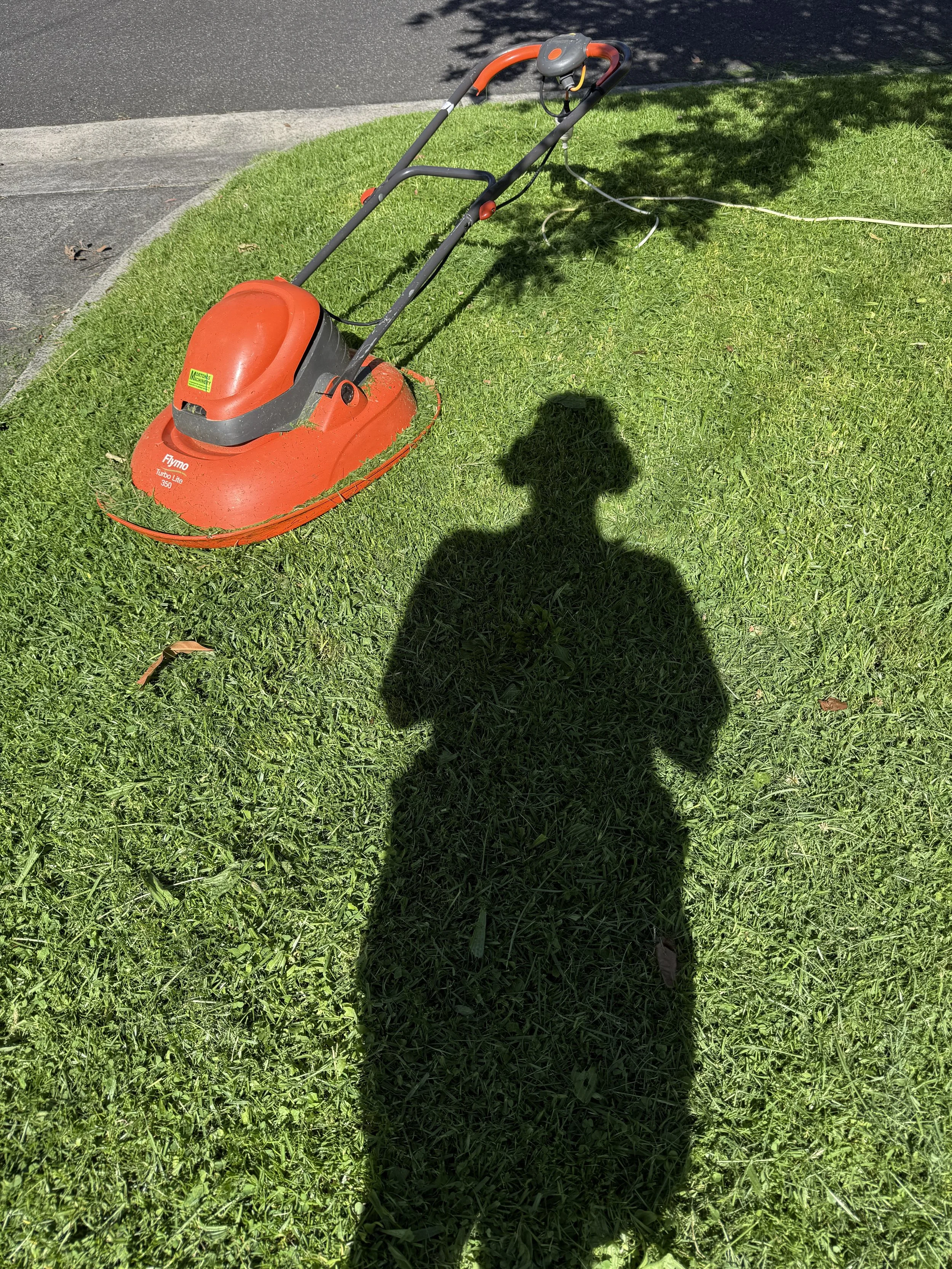
Sandra, while mowing in her own garden.
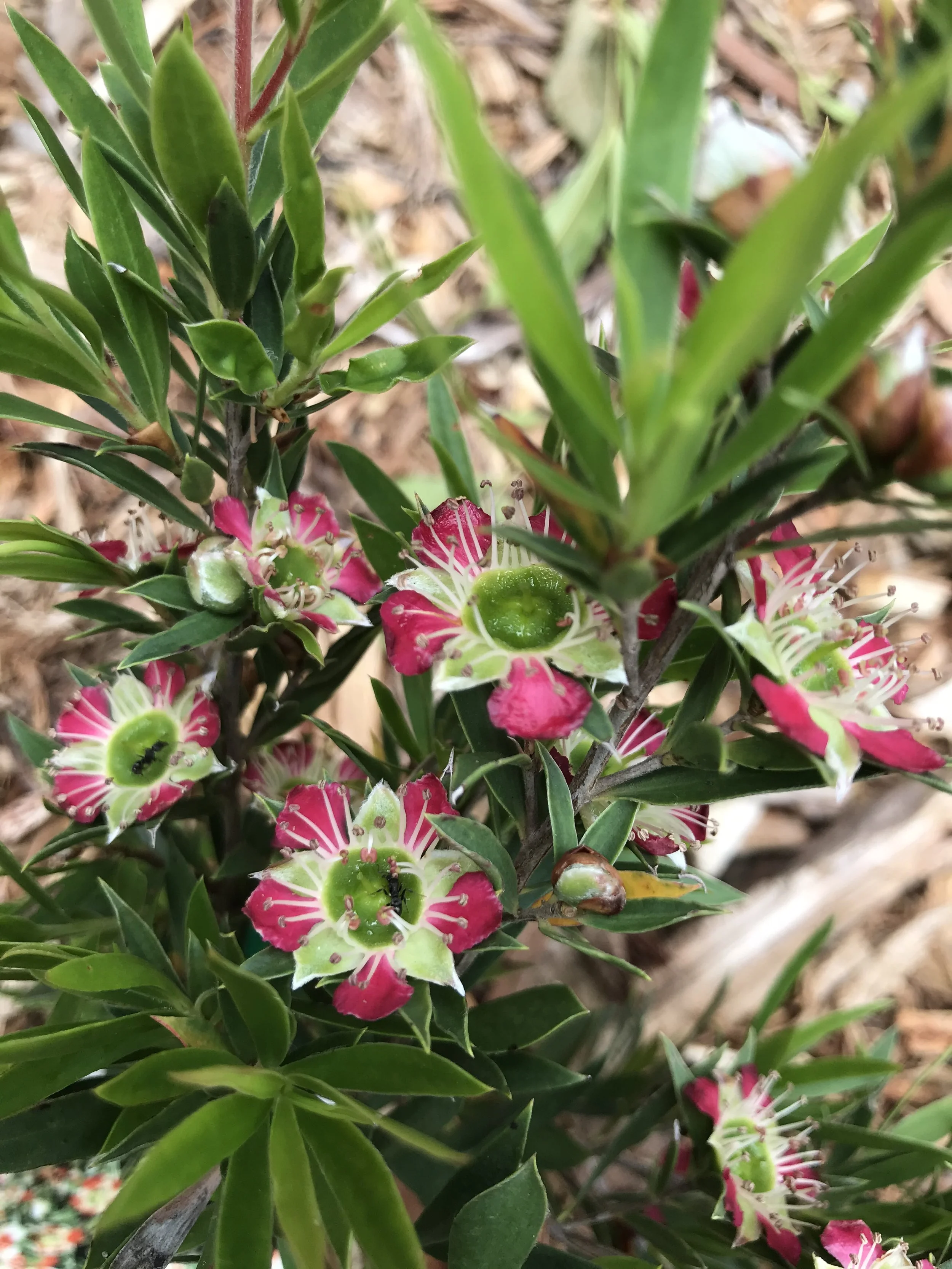
Leptospermum in Sandra’s garden
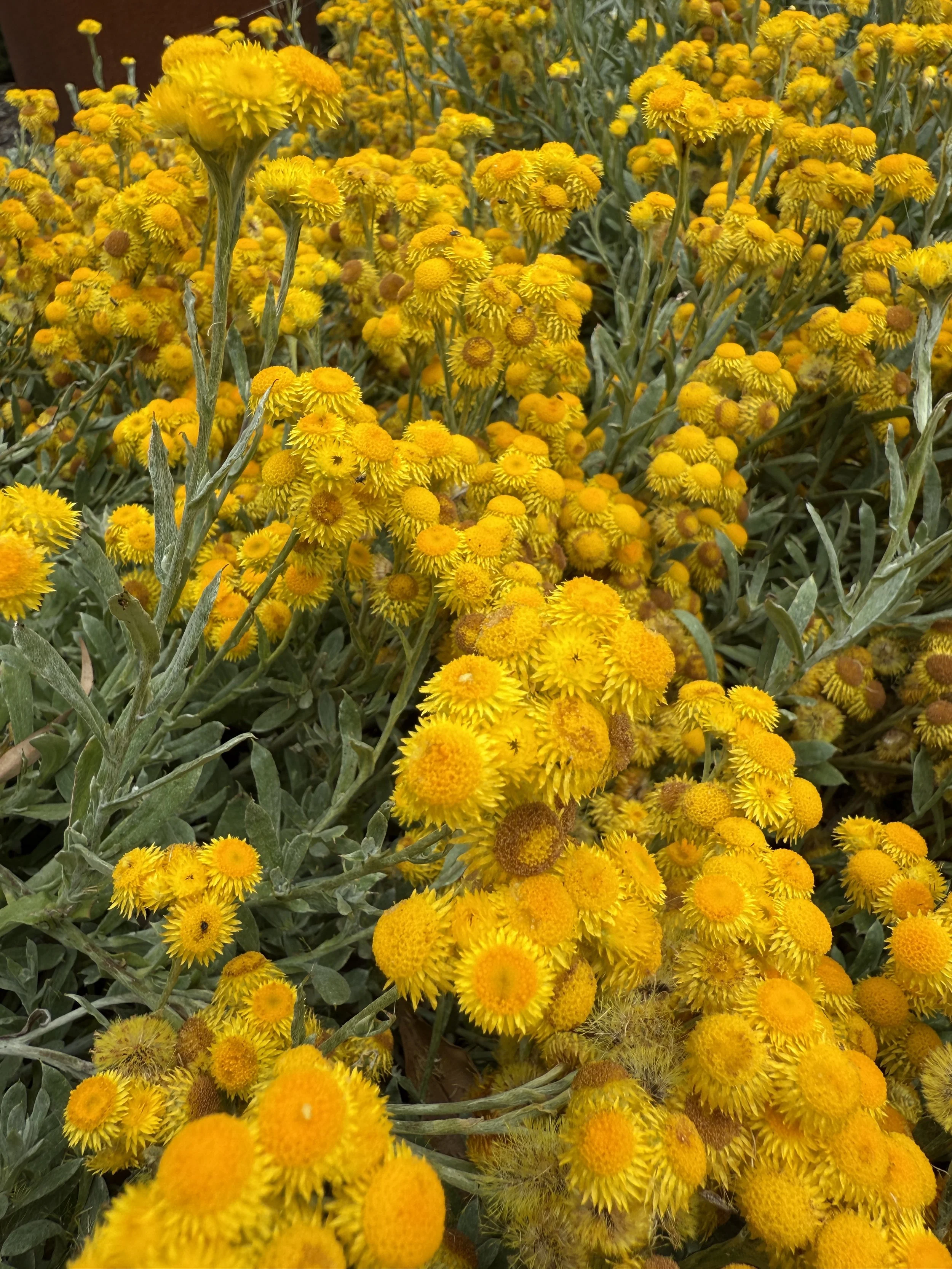
Chrysocephalum apiculatum, Everlasting Daisy, in Sandra’s garden
What do you enjoy the most about your gardening?
Being outside. Just being outside in fresh air, feeling the sunshine and breeze, hearing birds or other life around me. It’s all mentally and physically restorative for me personally, keeping me somewhat fit and at least active, getting my body and mind moving and interacting with the environment around me – quite directly so. It gives me time to move away from screens, from household chores, from indoors. It lets me listen to interesting conversations and stories in podcasts, learn new things, observe plants and how things grow and also die. It’s a bit of learning by osmosis I think, you take things in without trying or being conscious of it. Plus, I know through my research, all of the benefits of gardening and connecting to nature, from breathing in and ingesting good soil bacteria, gaining vitamin D, having my eyes exercise by shifting focus or relax by looking at green…as soppy as it may sound, it all just makes me feel better for having done it.
On top of that - especially when I garden out the front of my house – I meet people! I have made a few really special friends from neighbours who I engaged with during Covid-19 lockdowns while gardening my front strips. Getting chatting, or having someone engage with a ‘sharing table’ of seeds and the likes I put out front has then led to these relationships blooming (pun intended). Because these are relationships that started around a garden conversation, it is based on a shared interest or values – something that I am really grateful for in conversations and relationships built with many planty-folks. These relationships have now expanded to international ones, and these experiences have been so buoying, as you can see you are not alone in valuing gardens for all they offer and trying to share this with others. (We are a quiet revolution that is coming!)
What are your “go to” plants / planting palette and why?
This is a tricky one, I don’t think I have them yet, as I am still learning plants and which combinations are my favourites. That might be a question I’d have to return to in a year or two. Like many design areas and visual arts, and books really, I am interested in so much that I am still trying to define “my palette”. In saying that, I am starting to recognise a personal preference for forest landscapes (including temperate rainforests like the Dandenongs), naturalistic plantings and perhaps even cottage-style gardens, but also quirky details and vignettes with a sign of the hand-made. Planted places that are full of plants, which really hug you as spatial experiences and feel very natural (both perennial and annual) are a favourite. It’s an undefinable as the term “Hygge” in Danish perhaps, just something that makes you feel safe, relaxed and somehow ‘at home’ (which will of course differ for everyone in some way). That’s not much of a plant answer, but its where I am at in understanding my own aesthetic at present – appreciating diverse styles and evolving my own slowly.
Who has inspired or influenced you in your gardening pursuits and how did they inspire you?
Speaking chronologically, I’d say our neighbours where I was born, they had a great garden that we always visited when returning to Germany. It was their pride and joy, a great place to relax and a place absolutely abundant with life and nurturing (literally and figuratively). Unfortunately, both those neighbours have since passed, so it will be very sad not to see that garden again – but I will always remember it fondly.
Then, while it may sound corny in this context, you Steven, your gardens at both Royal Talbot and in Montmorency were / are little havens that bring such joy and comfort. There is also a type of “gemütlichkeit” (cosy, comfort) there, something that I have also recently felt in Annie Winter and Jacquie Chirgwin’s gardens when I was fortunate to visit them. I have felt very comfortable and at home in these spaces, really ‘nestled’ in all of these home gardens, perhaps also because they are of a human scale (not too big).
I get the same at my German friend Claudia’s garden too – like a gardeny hug and a space where there is care and love! I’d still like to pick apart what it is that makes me feel that way, beyond just lots of plants and cosy nooks, but that is a future goal. It will be great to unravel my experience and reaction to these spaces, as I can then learn from them more consciously and apply it to future projects and renovations at my own place – which is very exciting.
Finally, a place I was very fortunate to visit on my trip, Hilldrop in Essex (just north-east of London), which is the home of John Little and Fiona Chummay. Oh my, what a gloriously welcoming space that is, and by the time I had attended a few of their Modern Gardener Workshops (for Care Not Capital), it really was a little like coming ‘home’. The garden is a loose and comfortable experiment in full-life ecology and experimentation, partnered with enthusiasm and curiosity and then some absolutely amazing cooking and care by Fiona. It has been such a pleasure getting to know them, their community (human and beyond) and the garden itself – and learning from all of those.
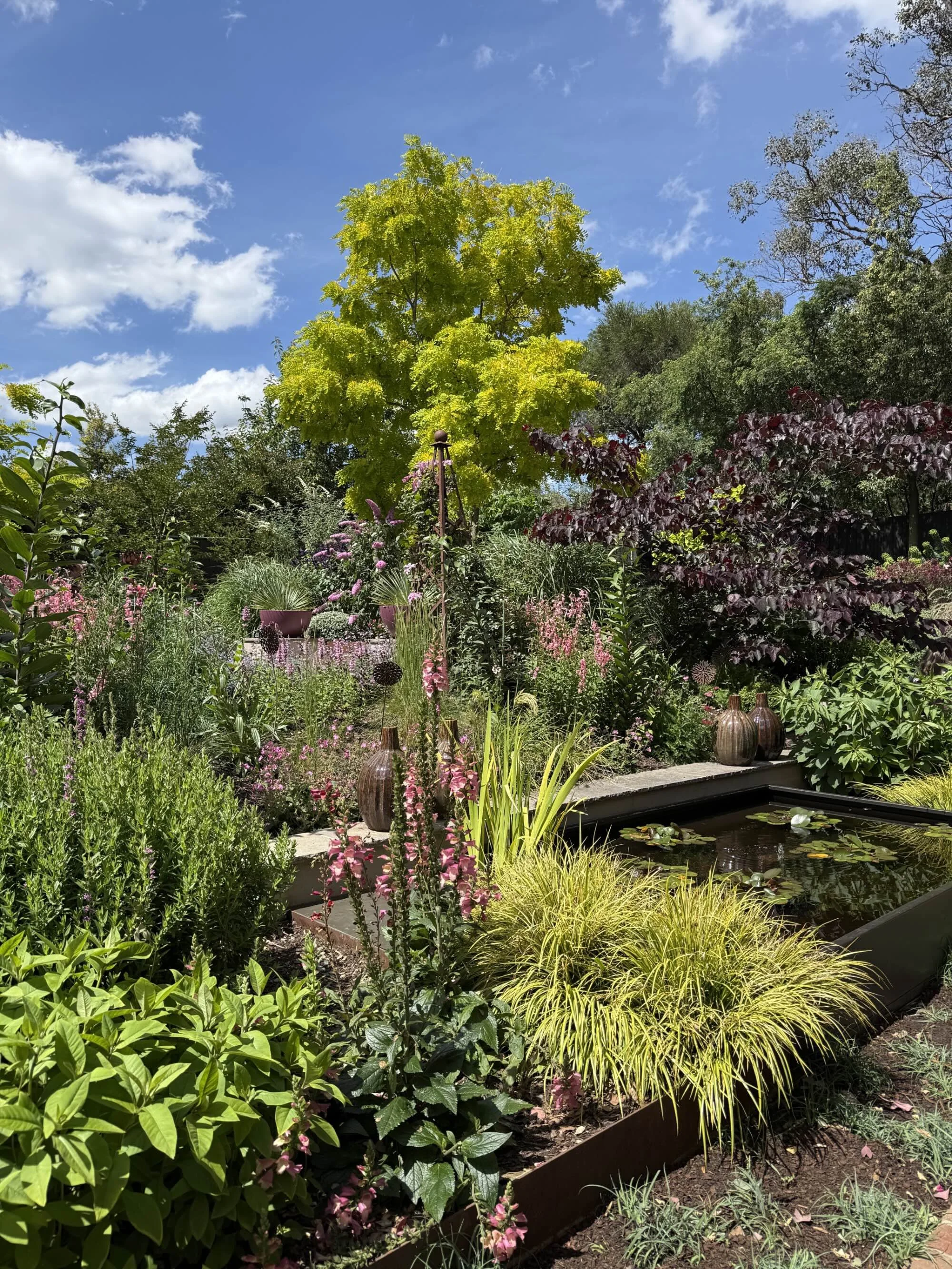
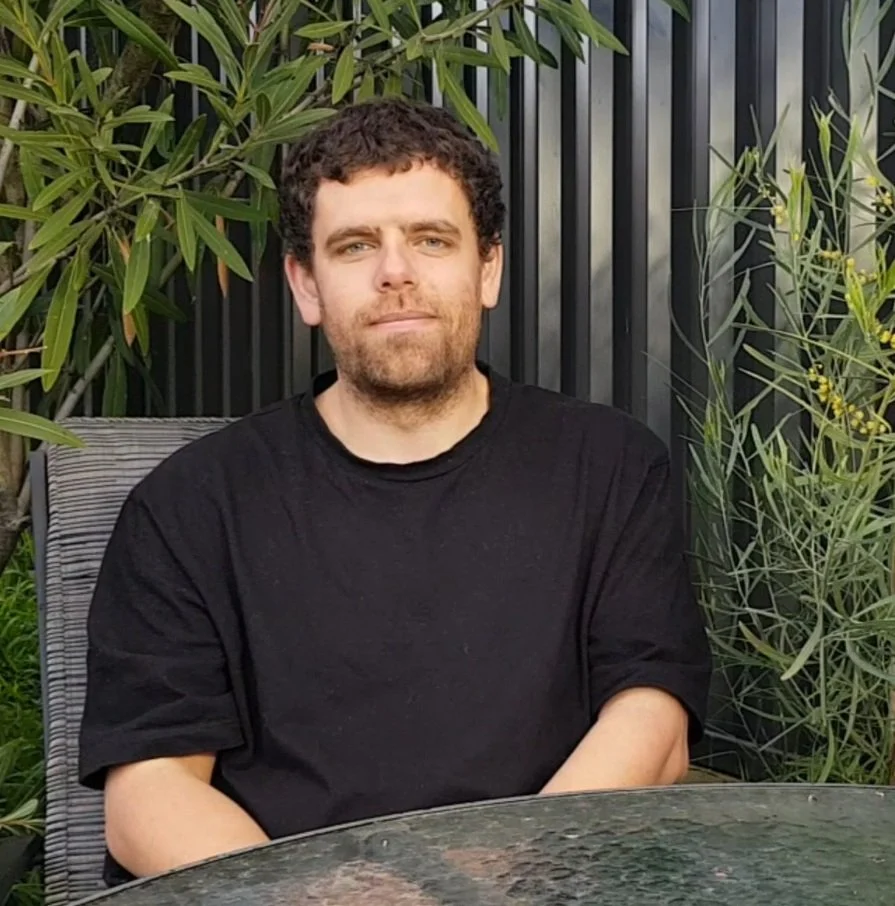
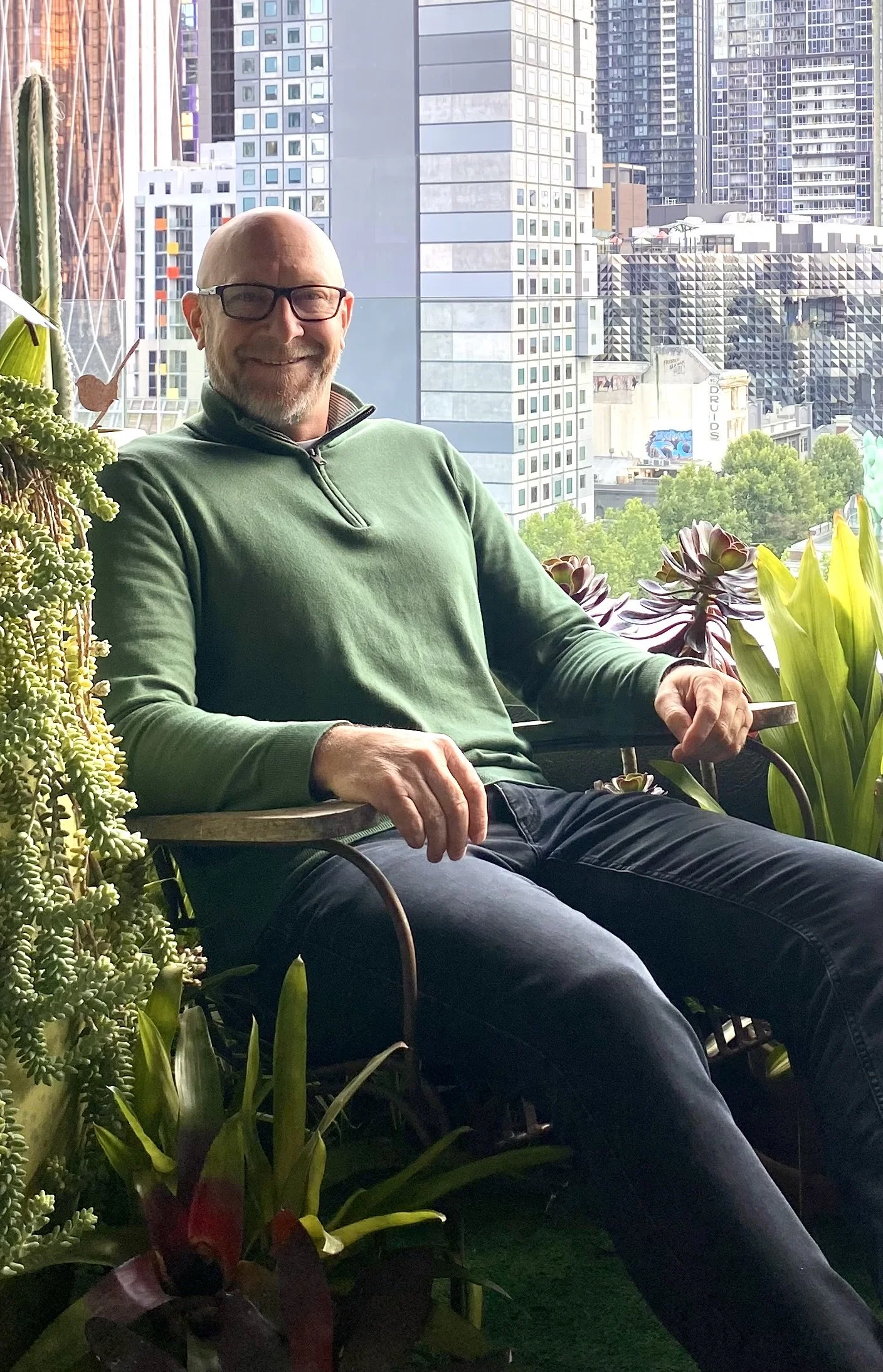
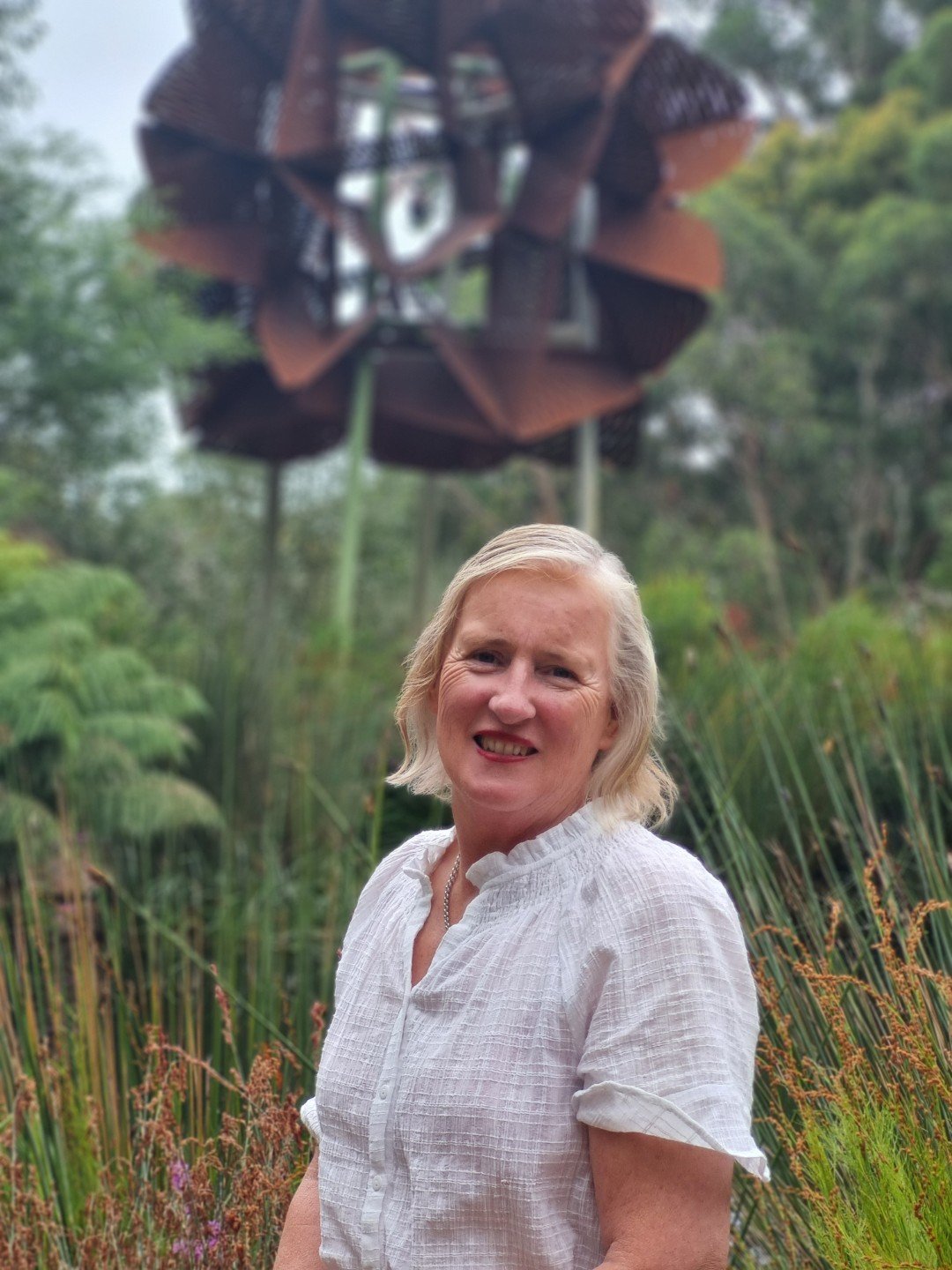
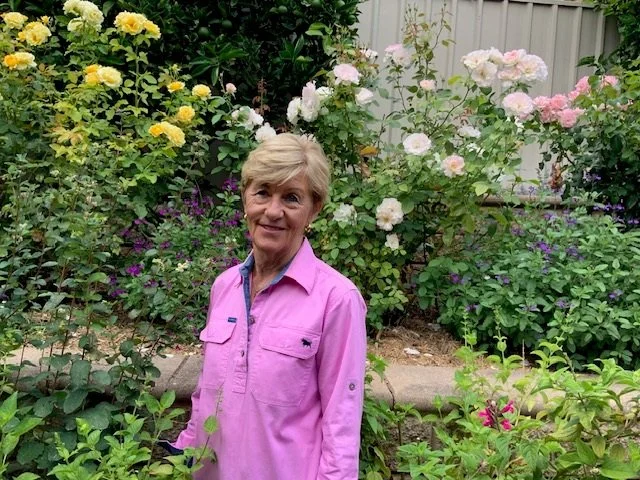
Jacquie and Paul Chirgwin’s garden, Templestowe, Victoria
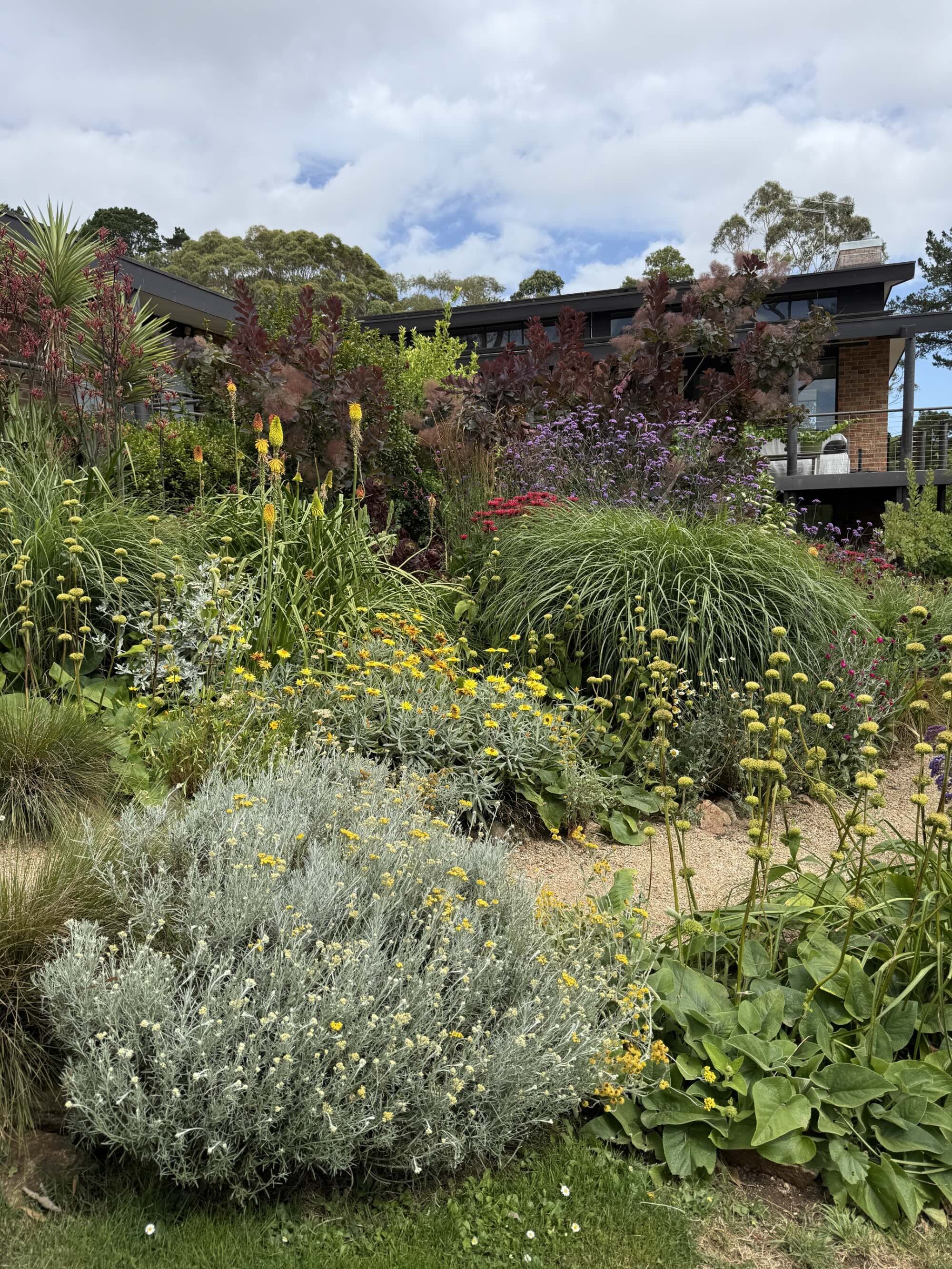
Annie and Paul Winter’s garden, Arthur’s Seat, Victoria
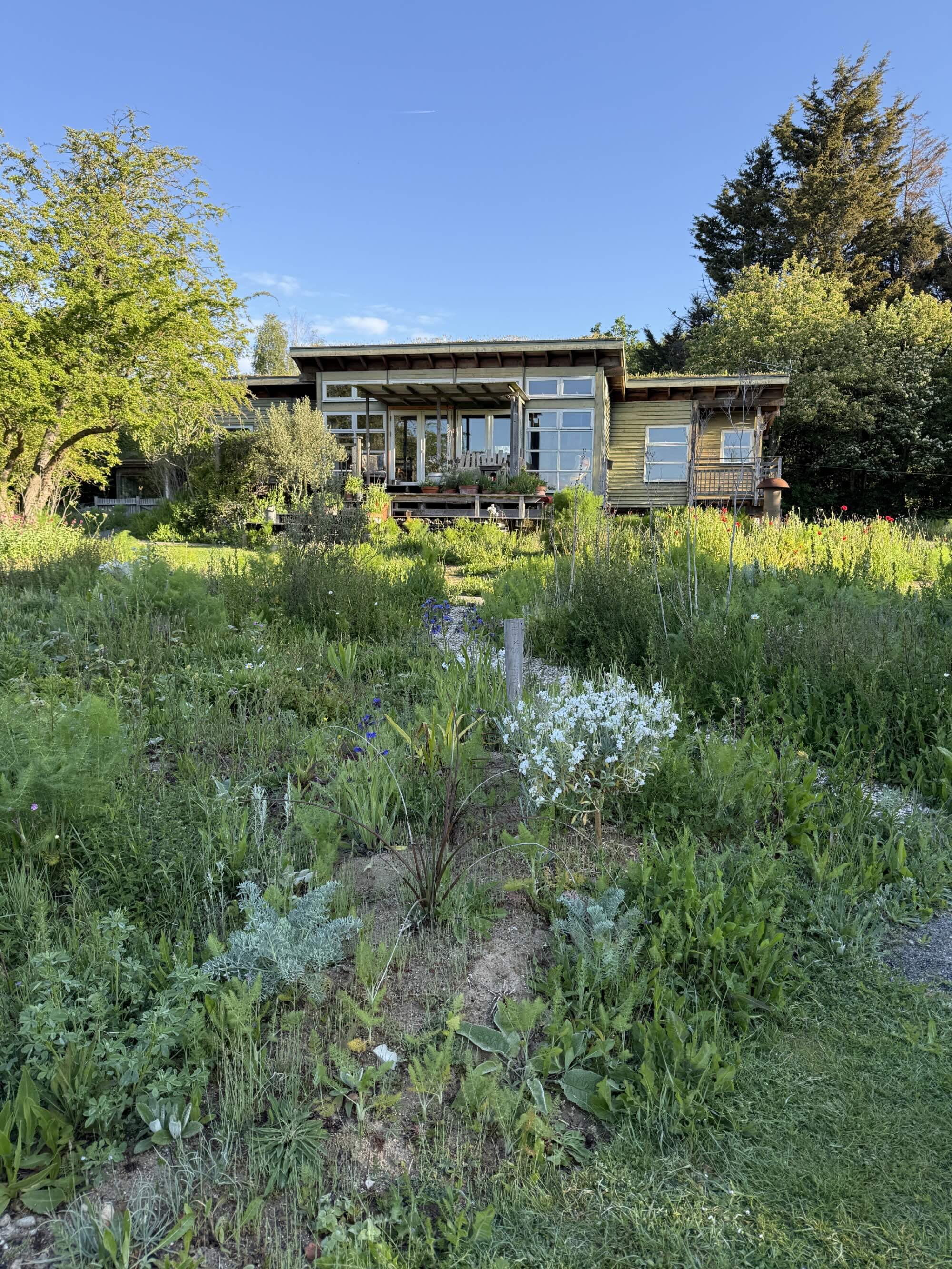
John Little and Fiona Chummay’s garden , Hilldrop in Essex, UK
What are some valuable things you’ve learnt while being a gardener?
Life goes on, whether you are ready for it or not. Things keep growing, weeds keep coming, birds and bugs join you as they wish. I’ve learnt it’s best just to watch and observe, to learn from all of those things happening. I plan to do this a little more consciously, be a little more intentional with what I am learning and taking away from gardening and the spaces in which I garden. It sounds a bit idealistic, but it’s a great way to mull things over, in a positive way, to work things through or try out new ideas in your head – in a similar way to walking, which has inspired great thinkers of the past.
I think I am still processing the idea of ‘being’ a gardener, lacking a bit of confidence perhaps, while simultaneously recognising that what I do is gardening. So maybe the value is in recognising that it’s a dynamic exploration of the natural world and that’s enough. I’ve also learnt that time is care (not just money) – it takes time to nurture a garden and the plants and life in it. But that is what makes it ‘care’, the time invested in it, which is reciprocated. It is energy, purpose and time that produces results in the long and short-term, results that are worth waiting for to enjoy.
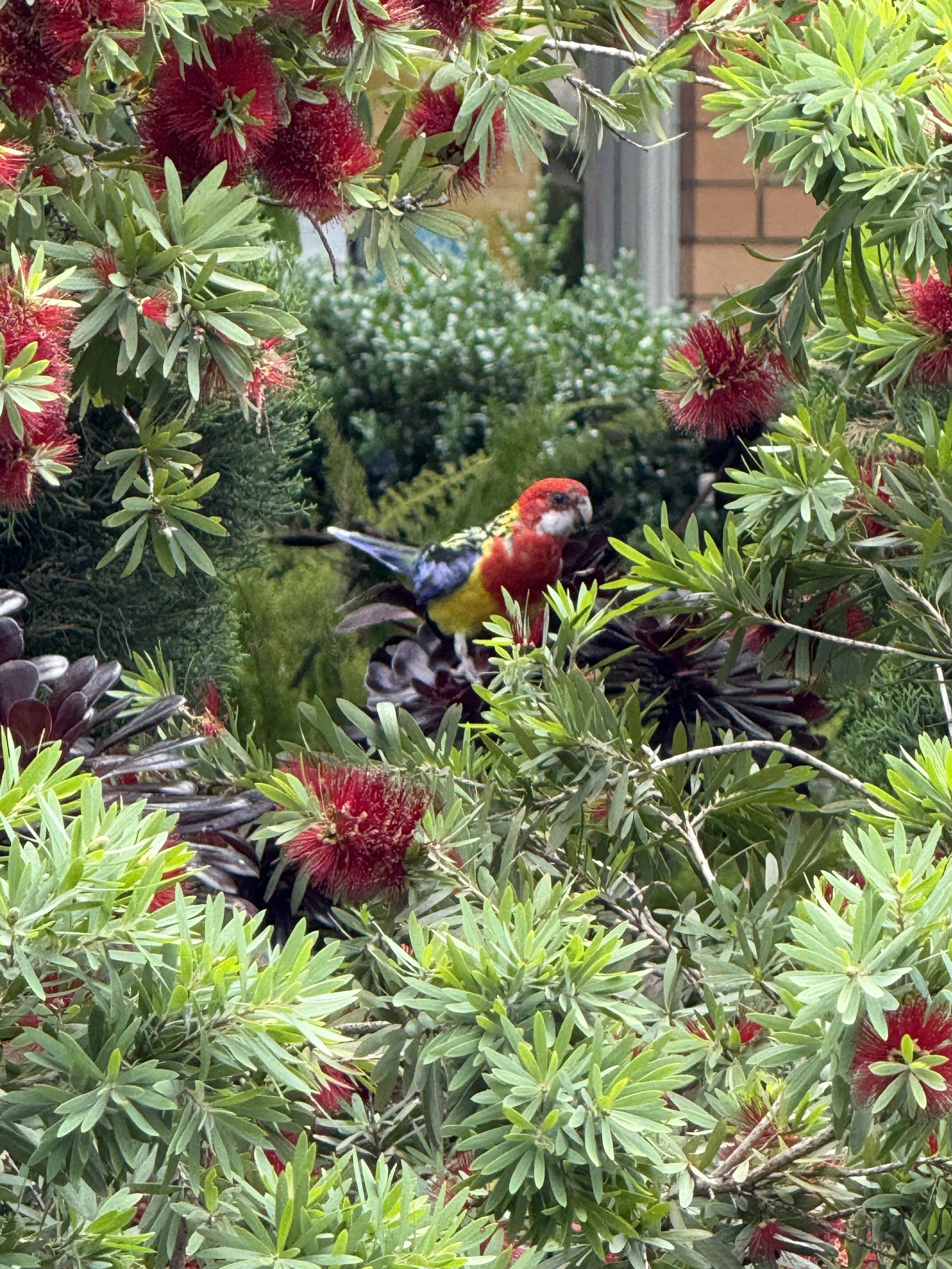
Watching and observing, rosella in the Royal Talbot Rehabilitation Centre gardens.
If you could be a plant in your garden what would you be and why?
This type of question always makes me react like a deer in headlights…picture tumble weed in my mind. (And no, that is not the plant I would be, though I recently learnt about its fascinating manner of spreading its seed.)
Perhaps Kniphofia? I have ‘Winter Cheer’ in my garden, and I like that it brings some pop of colour and a bit of punch into the garden in winter, just when I need a seasonal pick-me-up. I also like that Kniphofia raise their heads above other plants, like they are making sure to take a good and proper look around. Plus, I love a colour gradient! Otherwise, I’d like to be a Grevillea, because their flowers are just bonkers, fabulously bonkers with gorgeous colour gradients and forms. Why? Just ‘cos - and why not?!
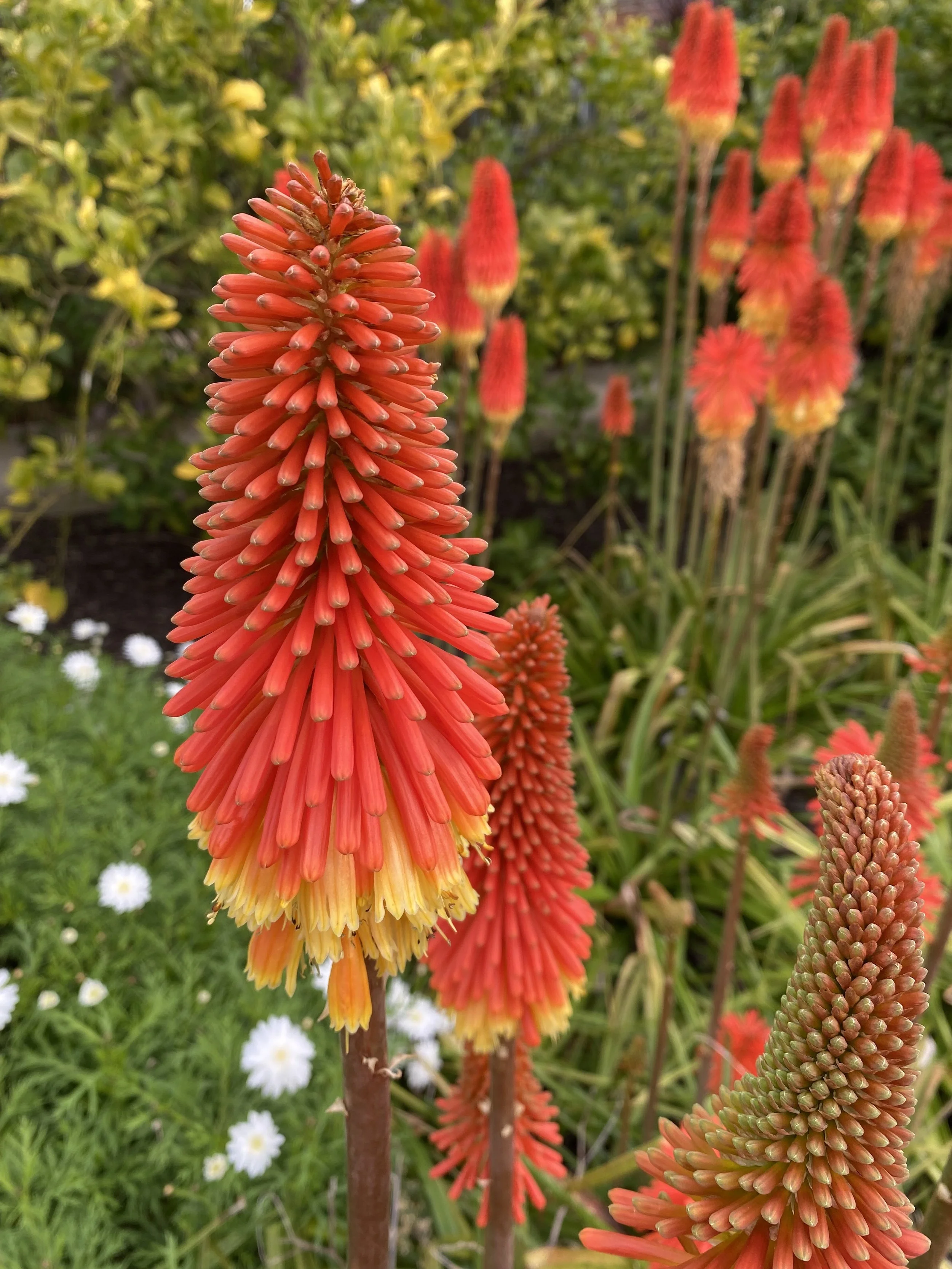
Kniphofia ‘ Winter Cheer’
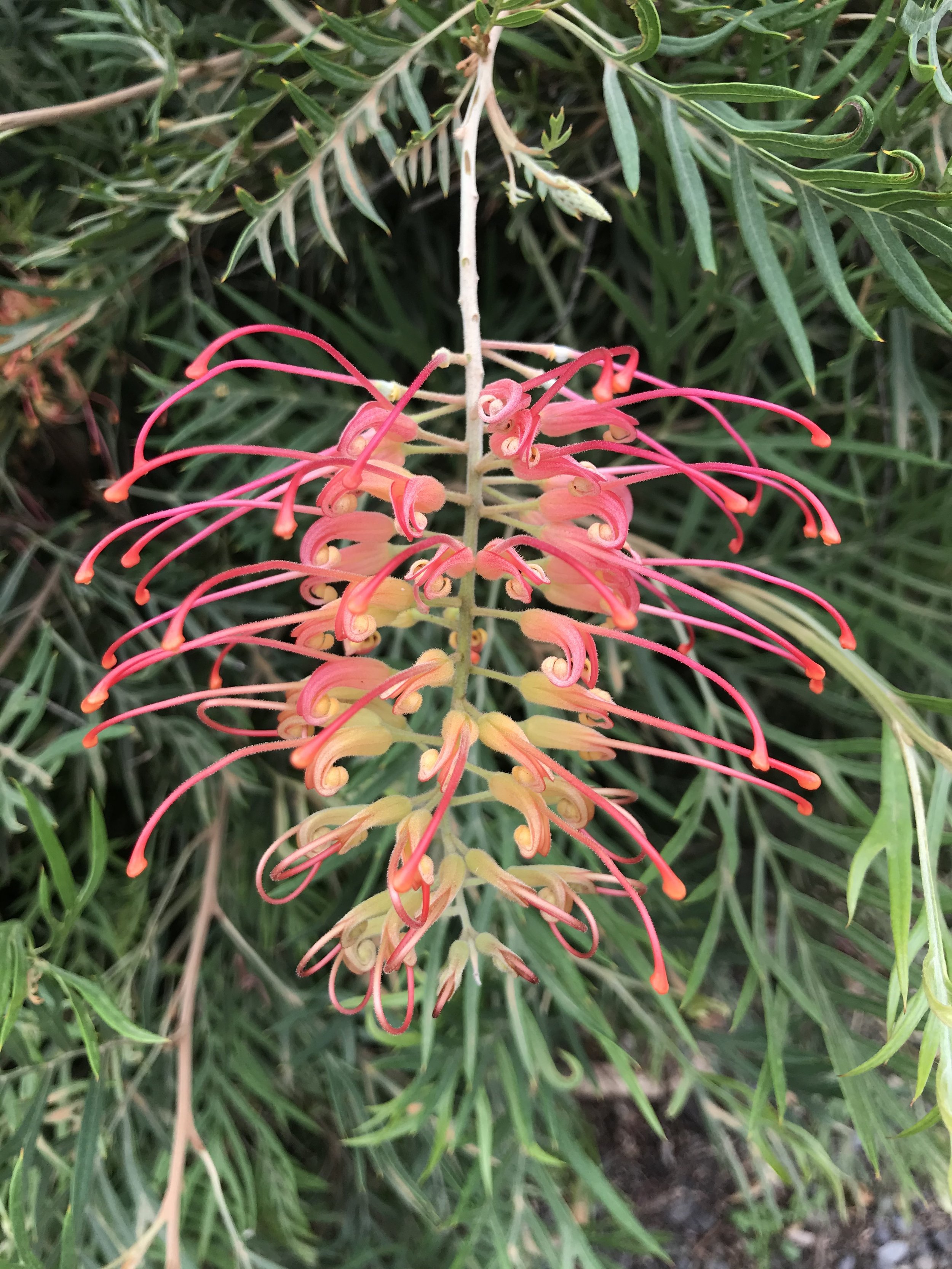
Grevillea
What do you either lie awake at night or find yourself day dreaming about with your garden, gardening pursuits or the horticultural world?
I don’t yet lie awake at night over this one, but it is certainly a dream, whether for a short-lived experience here in Melbourne or somewhere else in the world someday - planting a Birch copse. Meeting the ‘dancing birches’ swaying in the wind while studying in Sweden remains a highlight of my horticultural learning, and while I doubt I would be able to create a copse of that scale, a small gathering would be plenty for me. That is something specifically related to plants, but in regard to above answers, I dream of feeling more like a ‘gardener’, or perhaps what Jennifer Jewel (Cultivating Place Podcast) calls Gardening with a big G. I’m sure I’ll get there and regardless of, the journey will be a very worthy and enjoyable one.
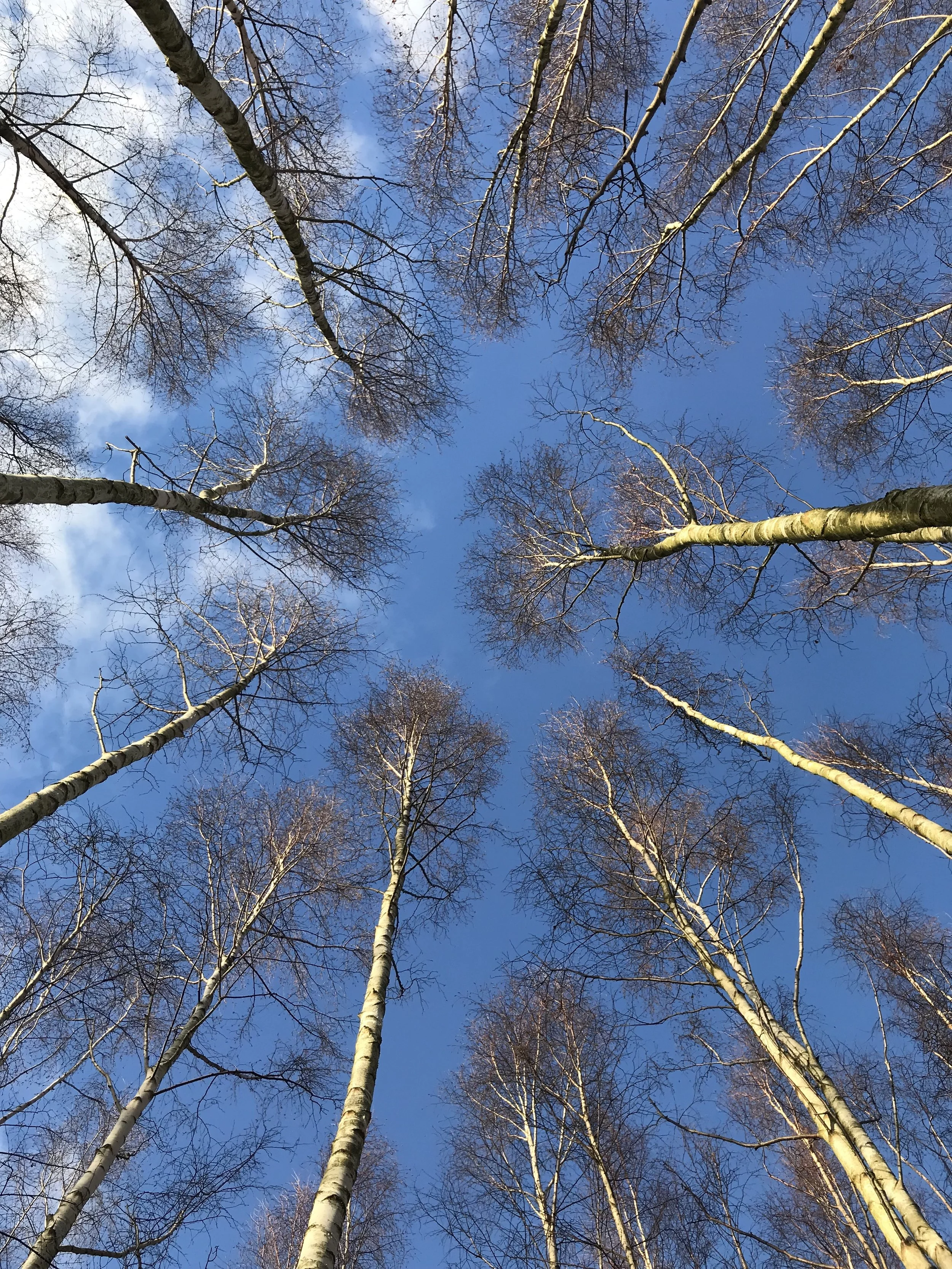
Birch copse
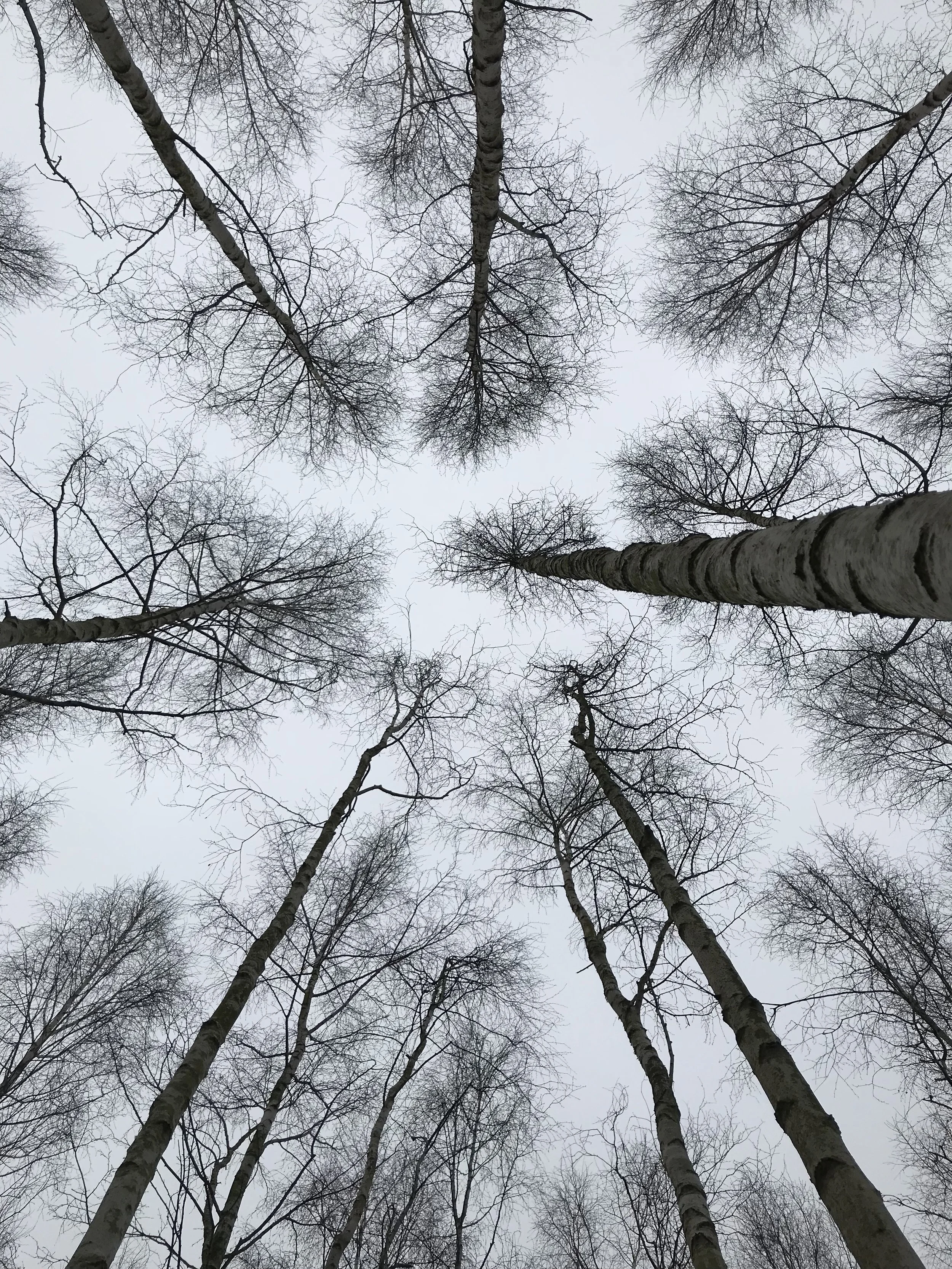
Birch copse
What are your most favourite tools to use when gardening?
Since reading this question, I realised that my most commonly used tool is a sharpened old bamboo toothbrush handle! I have a few and find it really handy as a dibber and a weeding aid when the ground is hard or weed roots deep. I also love that it is recycled and useful, and will be compostable when it finally breaks.
I also have a new pair of secateurs I received as a thank you for presenting RESTORE to some gardener folks, and I do love my long handled weeding tool. Sad to say almost all are weeding tools at present – but as noted earlier, that’s just where I am at right now, c’est la vie.
What words of wisdom do you have to impart to other gardeners?
Be kind and live the attitude of “Why Not?!”. We don’t generally regret the things we did, but more likely the things we didn’t try. Every gardener will tell you that we all kill plants and that this is part of the experience, but we also help things grow and that is worth sticking around for. Mainly, just get outside. Connect with the natural world in any way you can, whenever you can – it will improve your life, honestly, on so many levels if you give it the time and attention it deserves. And it’s a typical example of getting more than you give, in all sorts of ways.
Do you have a quote or life motto that inspires you to live and/or garden by?
Why Not?! Just give it a go, because We ARE Nature.
How do you think we can encourage, inspire and support more people to be gardeners?
Being around plant and garden people is inspiring, we / they are just great people who care. You see that again and again in the generosity of shared green spaces, plants and experiences. I think as long as we keep talking about our mistakes and approach all people and experiences with respect and kindness (acceptance), we will all benefit, learn and grow.
It can all start to sound a bit clichéd and like an advertising pitch or curated Instagram reel, but just doing what we do with passion, curiosity and genuine deep interest is inspiring. Sharing what we do and love is pure and simple infectious – in the best way.
Finally, I would encourage everyone to take someone (especially someone starting out with gardening) with you to a garden, invite them to visit open gardens or see your own, basically everyone should just more spend time in gardens and the natural world – it makes us all feel better!
All words and photos supplied by Sandra Schwarz, with sincere thanks.