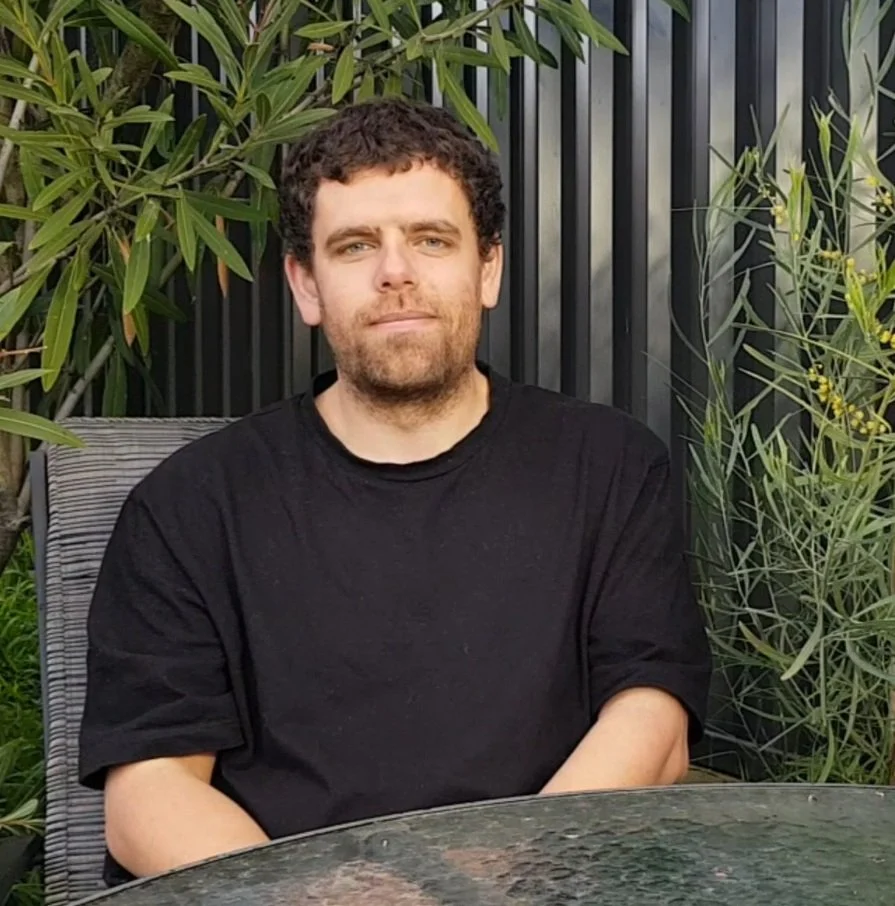
Gardener Folks - Patrick Wain
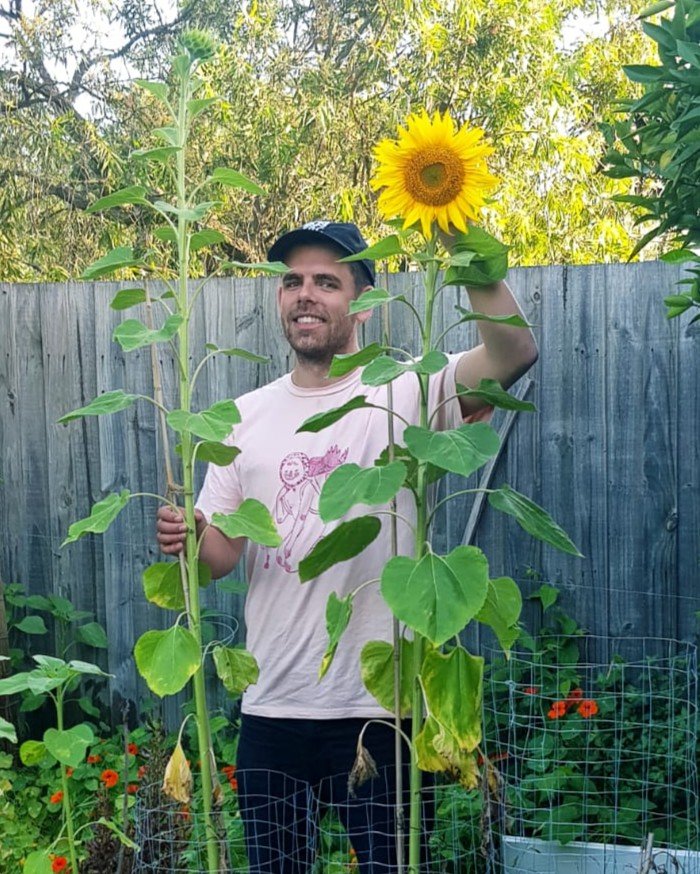
Patrick with his potted sunflower
I hope you’re enjoying your gardening and that you’re ready for your next dose of Gardener Folks inspiration.
Let me introduce you to Patrick Wain who is a passionate gardener, both for leisure and his work. I have known Patrick through the therapeutic horticulture world for a little while now and have been really encouraged by his work and passion for bringing together connections with plants and people. So it is wonderfull to have Patrick share more about his gardening here on Gardener Folks, and also about his own balcony garden.
To see more of his gardening happenings you can follow along on Patrick’s Instagram @deafgardener
I hope you enjoy this read as I did. Happy gardening. Cheers, Steven
Can you please provide a brief background of yourself?
My name is Patrick. I’m a gardener, luckily for both work and leisure. I’m passionate about the therapeutic benefits of gardening and nature, and that has led me in how I garden and what I do for work. I grew up in Naarm (Melbourne) and have always lived and worked there to this day. I’m Deaf and a lot of my social and professional life is in or related to the Deaf community. Before my current job I was a Disability Support Worker, urban farmer, educator and mechanical engineer. I’m from a family of dedicated Collingwood supporters but the only one so far to get a Collingwood tattoo.
How did you get interested in gardening?
There’s home video we have of me and my brother when we are 4, pointing out things Dad had planted in the veggie garden. That had to be the start of it. I didn’t do a lot of gardening myself after that until I was about 23, and doing an engineering internship. Another intern who was 10 years older passionately spoke about his veggie garden, and encouraged me to get started. So I did – I bought seeds online, learnt how to sow them, didn’t water them or put them in a sunny spot, wondered why they were leggy and then dead… then tried again, raised seedlings and then eventually convinced Mum and Dad to let me build some garden beds in their yard. I filled it with soil and tried and failed to keep veggie seedlings going few times until I finally succeeded with something – Kohl rabi.
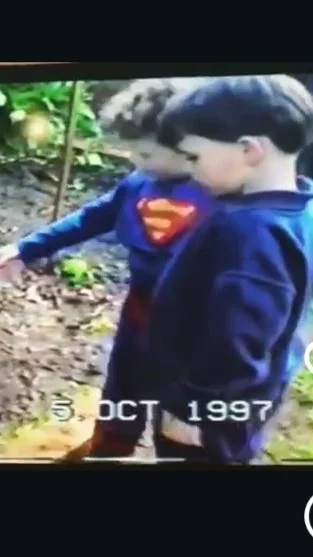
Patrick and his brother aged 4 years old
Describe your gardening experiences now? What does gardening and your garden look like for you?
I garden at work and at home. My work is in Therapeutic Horticulture, at Kevin Heinze GROW – a charity NDIS service provider which runs therapeutic horticulture programs mostly for disabled people. I’m glad to be there in the garden with other disabled people.
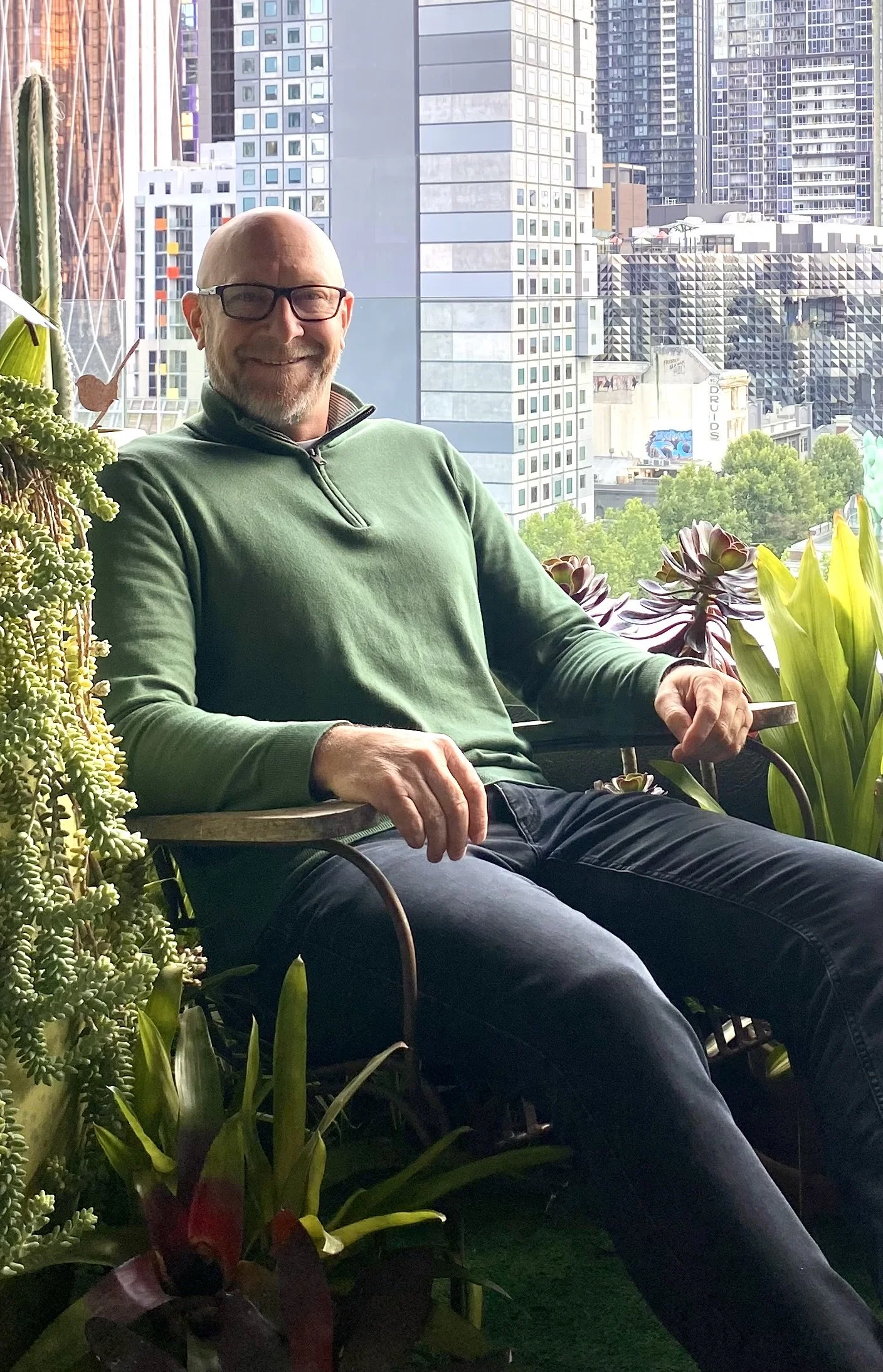
Home gardening for me is small-scale now – I’m in an apartment in Preston. We have a north-facing balcony – a big one as far as balconies go. So far since moving here 16 months ago me and my partner have grown some tomatoes and herbs, and experimented with lots of ornamental plants. We’re more into natives than non-natives, but I’m trying out some other things, like bamboo. My partner has been trying out different flowers and it’s brought the bees in.
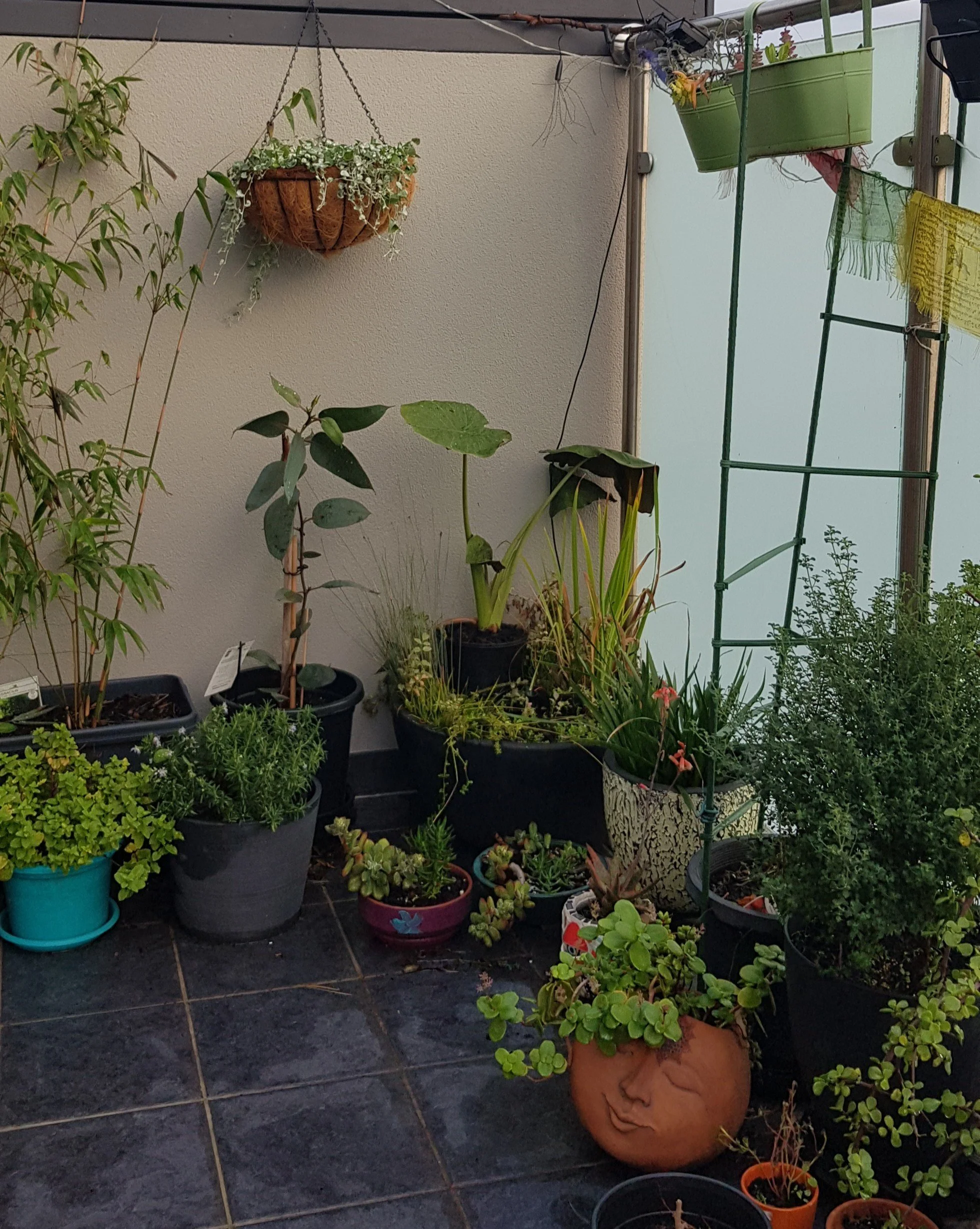
Patrick and his partner’s balcony garden
What do you enjoy the most about your gardening?
I garden because it’s good for me. I feel happier, more at ease and relaxed if I’m getting my gardening in. I love learning new facts about plants and their biology. I like sensory things. I don’t wear gloves, I want to feel the dirt.
After I went to uni the first time, I worked full time in an office in the city, trying desperately to get outside for 20 minutes at lunch and yearning for more time in nature. I wasn’t happy and I burnt out easily. Once I could garden more I was happier.
I love seeing something for the first time. Last year I stood in a bamboo forest in Japan, staring up at bamboo stalks 6 storeys tall and almost as wide as me, and wondered how tall they could get in pots on my balcony. So I found a couple of varieties good for containers and put them in. I’ve seen a new bamboo shoot coming out of the ground many times. But recently when I saw the first new shoot coming out of the ground of the bamboo I planted, it felt like I was seeing something new. Thelma, our cat, likes sitting in it.
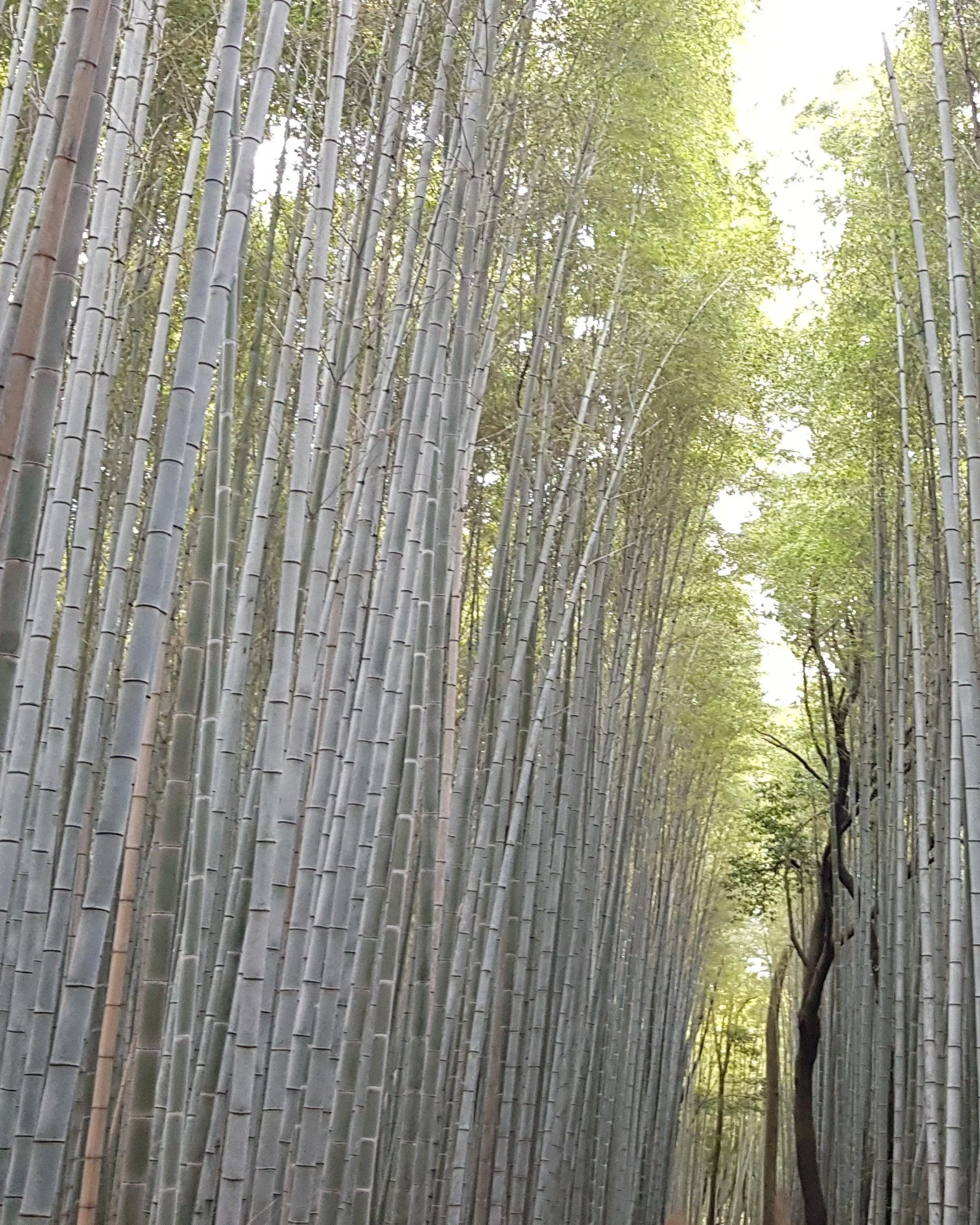
Arashiyama Bamboo Grove in Kyoto, Japan
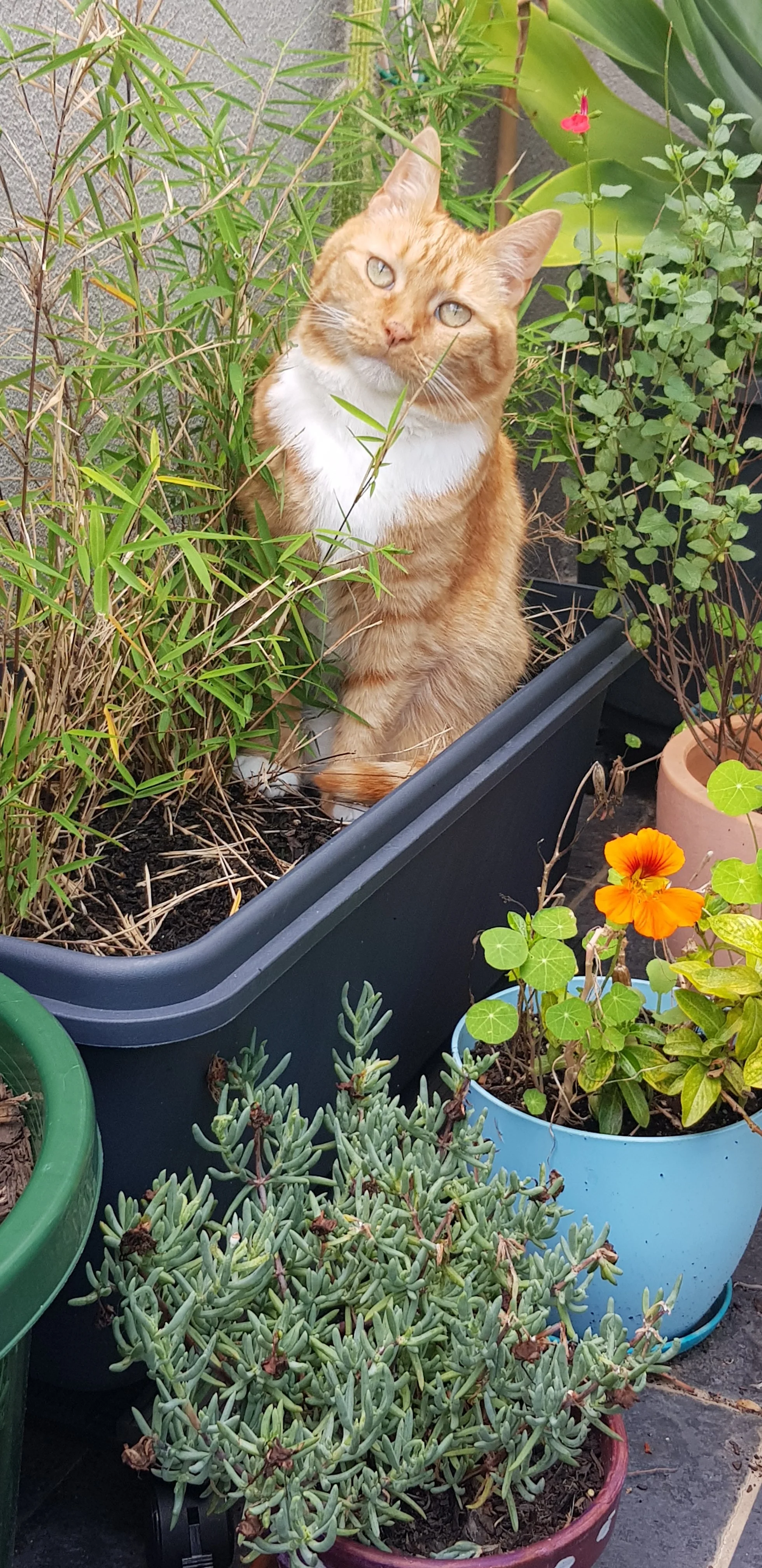
Thelma amongst enjoying the bamboo
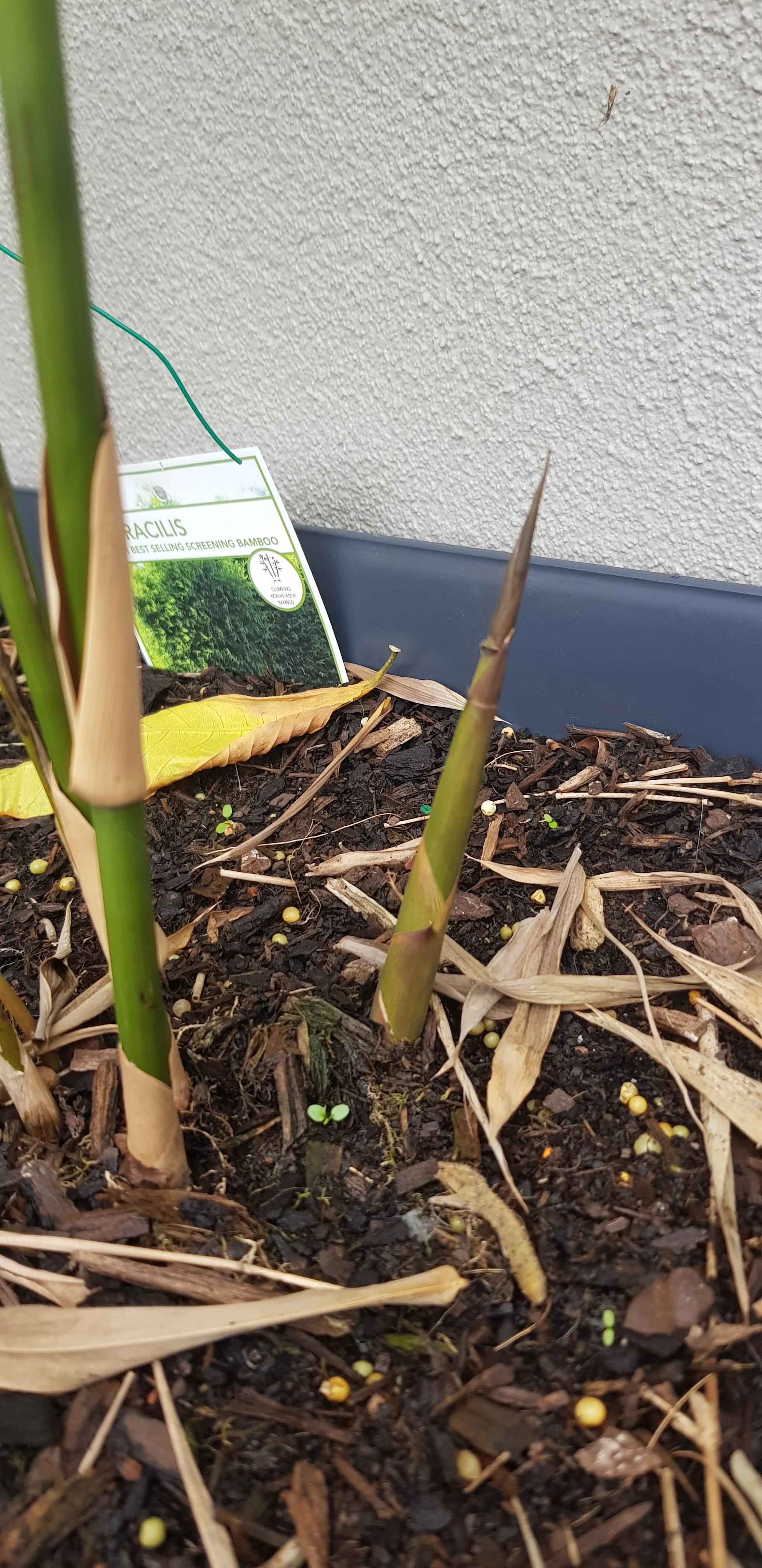
New bamboo shoot growth - Bambusa textilis ‘Gracilis’, Slender Weaver Bamboo
What are your “go to” plants / planting palette and why?
Like a lot of gardeners now, I usually think about natives first. If I can find a native, especially one that’s local, I’ll choose that first.
I really appreciate sensory elements of plants – if the leaves have an interesting texture I might pick it, especially softer textures. I like sweet scents, especially in plants that I can run my fingers through and smell on my hand, like lavender and passionfruit marigold. I’ve got a Woolybush on the balcony that I run my fingers through every time I go out there.
Like everyone did when the Covid-19 pandemic started I got very into indoor plants. I go for aroids so I can propagate them when they’ve grown a bit. Although some of them I’ve avoided cutting from, to see how long they can really get. There’s a few plants that have come with me through 6 different houses and I’ve got them climbing up walls and along the ceiling now. Apparently that’s bad for the plaster.
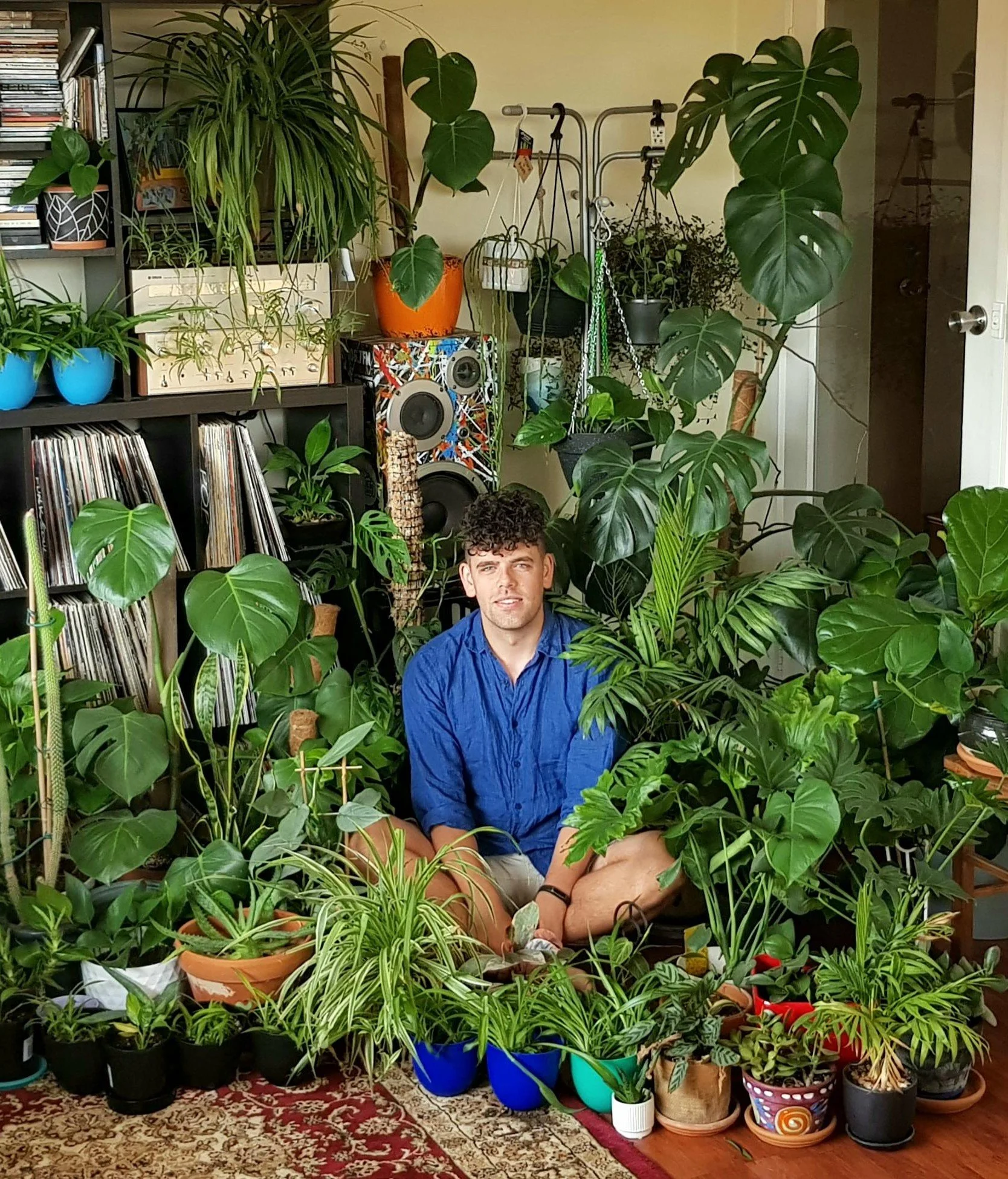
Patrick amongst his indoor plants, 2020
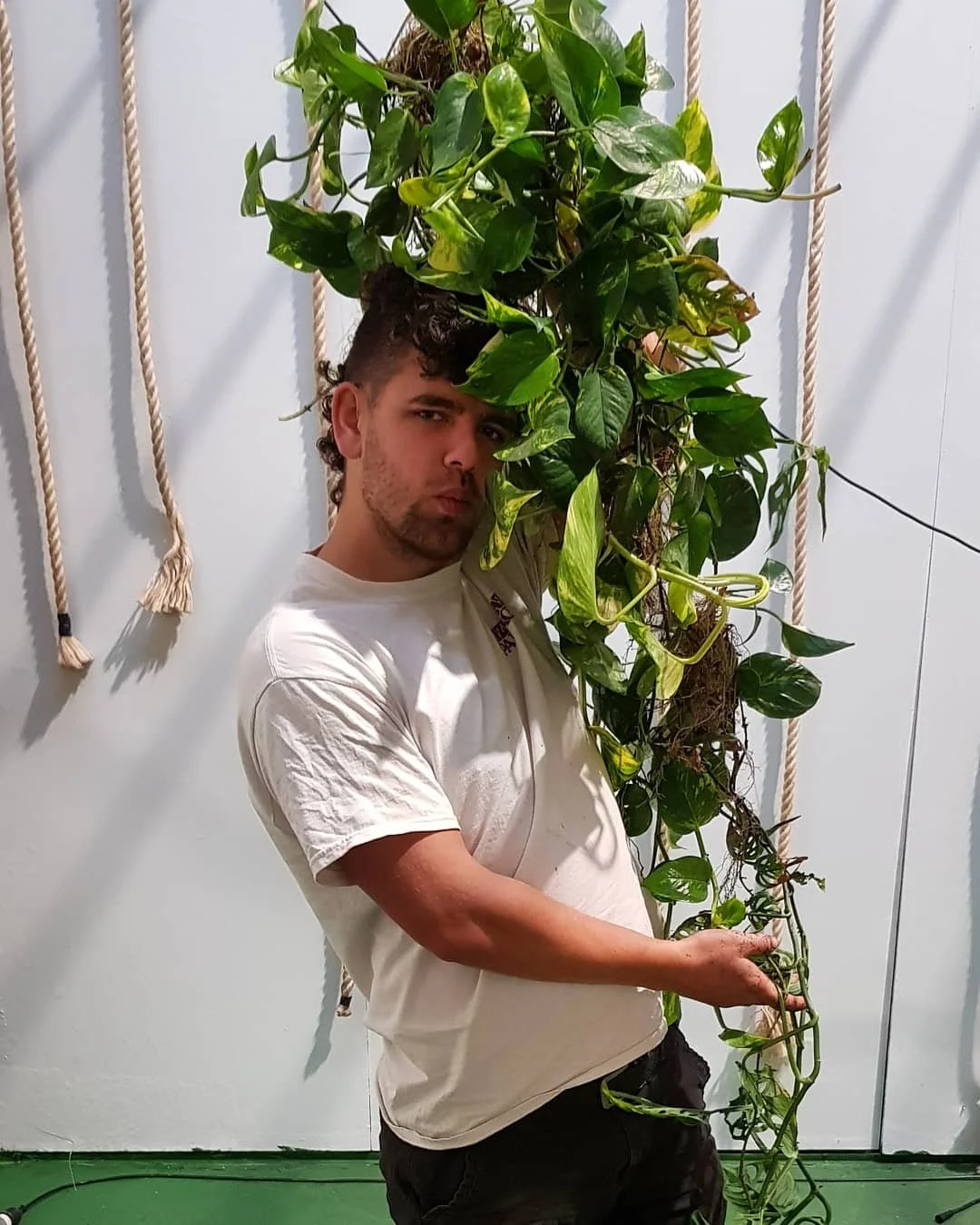
Patrick and his Devil’s Ivy, Epipremnum aureum
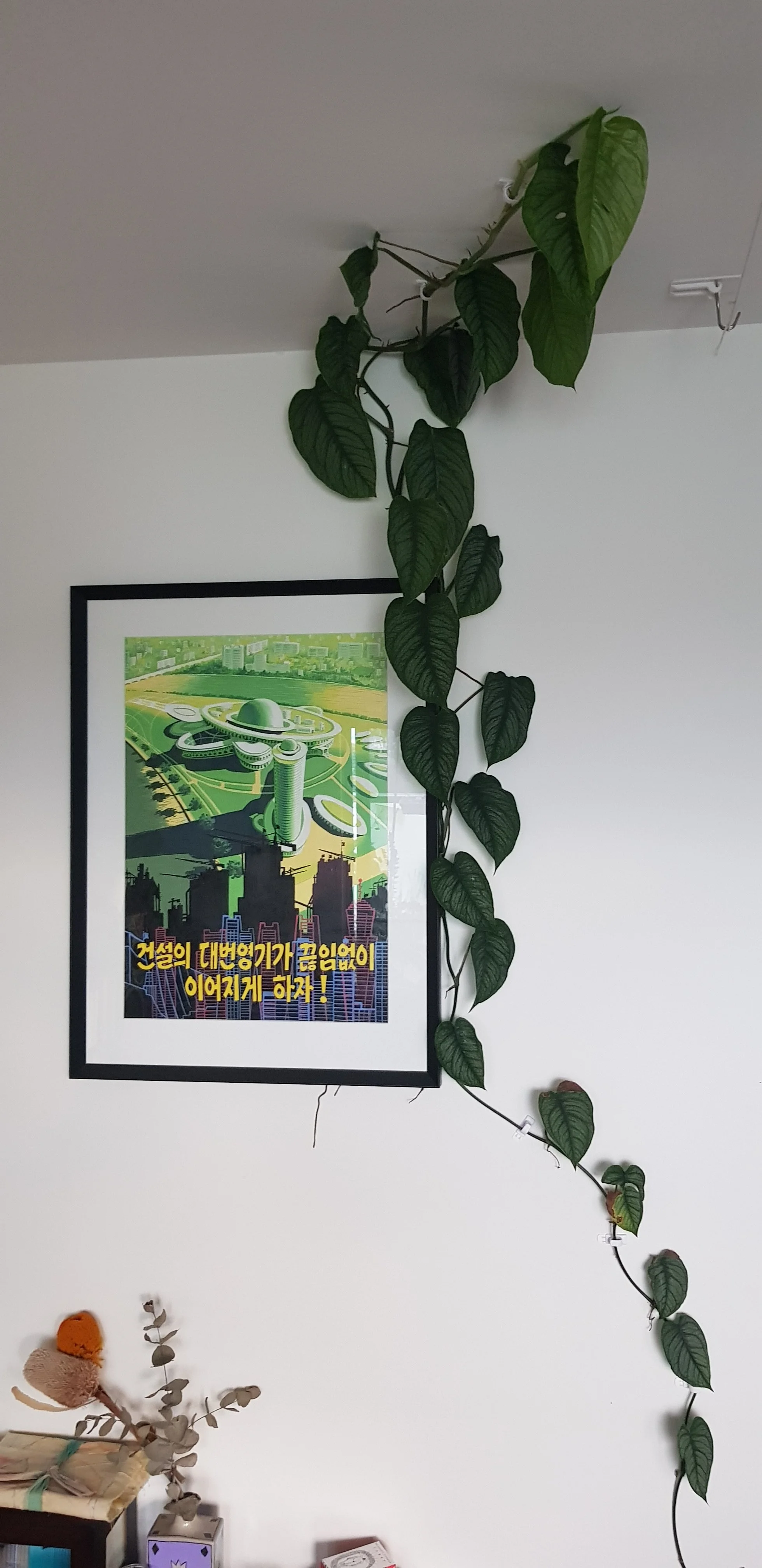
Monstera siltepecana climbing the ceiling
Who has inspired or influenced you in your gardening pursuits and how did they inspire you?
Early inspirations would be my Dad and Nanna. The house I spent most of my childhood in had a lot of different trees and plants which Dad took care of. Nanna’s house, which was the same house mum grew up in, always had a nice garden and she had a shadehouse stacked with cacti.
For indoor plants, it was a lot of indoor plant people on Instagram. But I also went to Burnley to study horticulture in 2020, and learnt about green roofs and walls there, then started seeing more of them around Melbourne.
I learn the most from where I work, just from observing what all the participants there are doing in the garden and when they invite me to be a part of it. A few of them are the best gardeners I know so I try to learn as much as I can from them – about how to garden and how to be in the garden.
What are some valuable things you’ve learnt while being a gardener?
Don’t get hung up on things living, and be grateful when they die. I find acceptance hard in life but very easy in the garden. I find it so easy to say “it is what it is” and enjoy it.
Something I’ve also learnt is that there really isn’t a wrong way to garden. When I first learnt gardening I was very set on figuring out the ‘right’ and ‘best’ ways to grow the biggest veggies and have the most perfect soil. I’d just been in uni studying engineering and I think it brainwashed me into trying to systemise everything to optimize output. I’ve changed a lot since then. I’m really averse to anyone who tells someone that they’re doing something wrong when they’re gardening. There might be ways you’ve done that have worked well for you, and things you know help grow plants better, but getting that wrong is an important part of being a gardener. It’s not wrong to do bad gardening. There isn’t even such a thing as bad gardening. You learn a lot from accidentally killing your plants. Everyone should do it more.
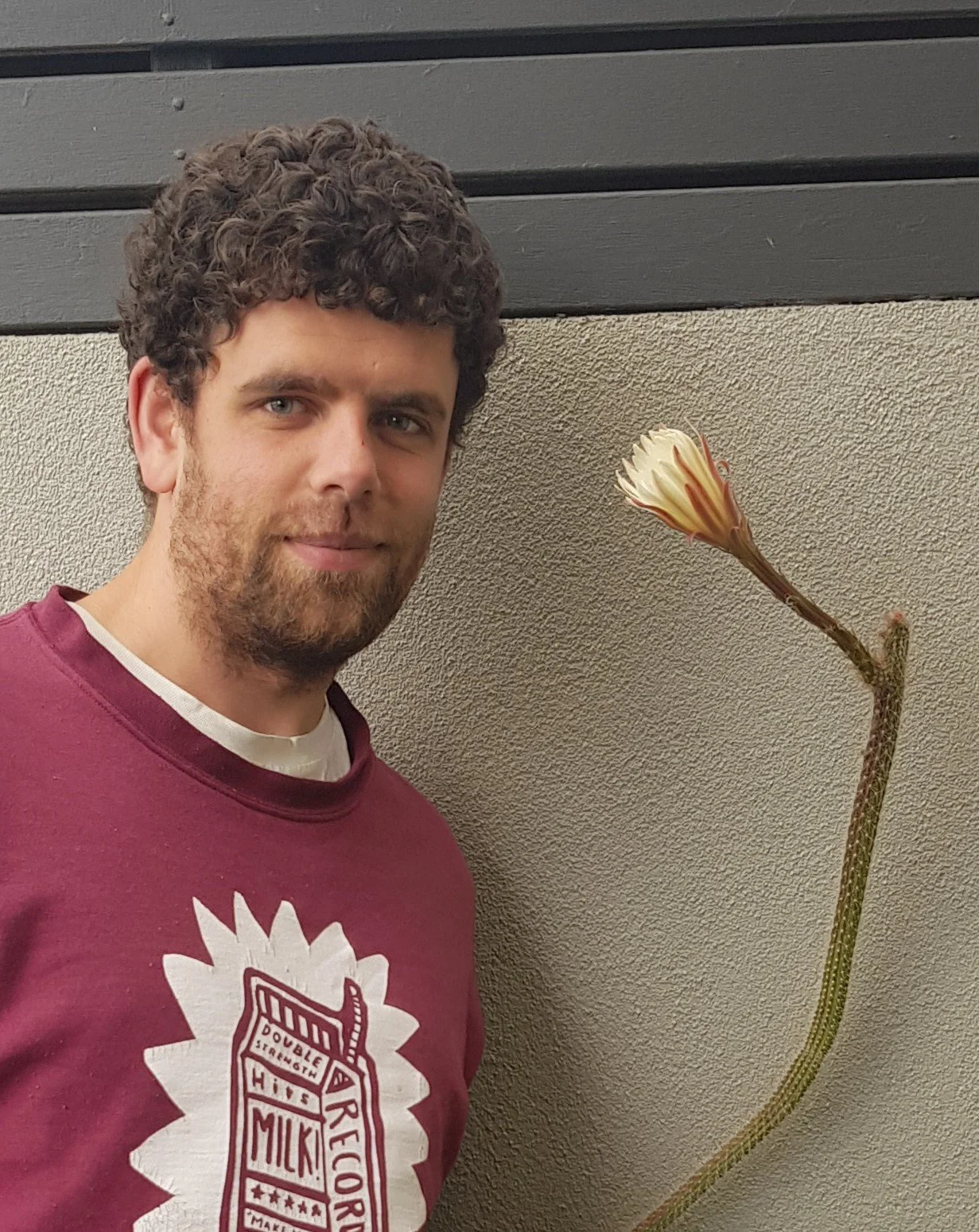
Patrick and his flowering cactus opening new years eve 2025
If you could be a plant in your garden what would you be and why?
Maybe the nasturtiums. I like that they’re just a bit spicy when I eat them. Sometimes I wish I was more spicy.
What do you either lie awake at night or find yourself day dreaming about with your garden, gardening pursuits or the horticultural world?
I want to get out to the bush eventually, a grow more food there. When I get out of home the first place I go is the Dandenongs. The mountain ash tree is my favourite plant in the world. I’ve seen them 100s of times and still get amazed when I go back. When I daydream I picture myself living amongst them.
I’ve had the chance to do some gardening-related work in the Deaf Community in recent years and it’s been really fulfilling. I was born Deaf but have only been involved in the community for a few years. My friend Hadley helped me hold an online event all about indoor plants in 2022, that was the first. I’ve done some workshops since then, and last year collaborated with some artist friends to do a conceptual piece combining plants and their art mediums for FLOW Festival. I learnt a lot about myself from doing that. So I want to do more with plants and gardening in the Deaf world, and intersecting with art and identity. There’s a lot of talented Deaf gardeners and artists out there I want to connect with more.
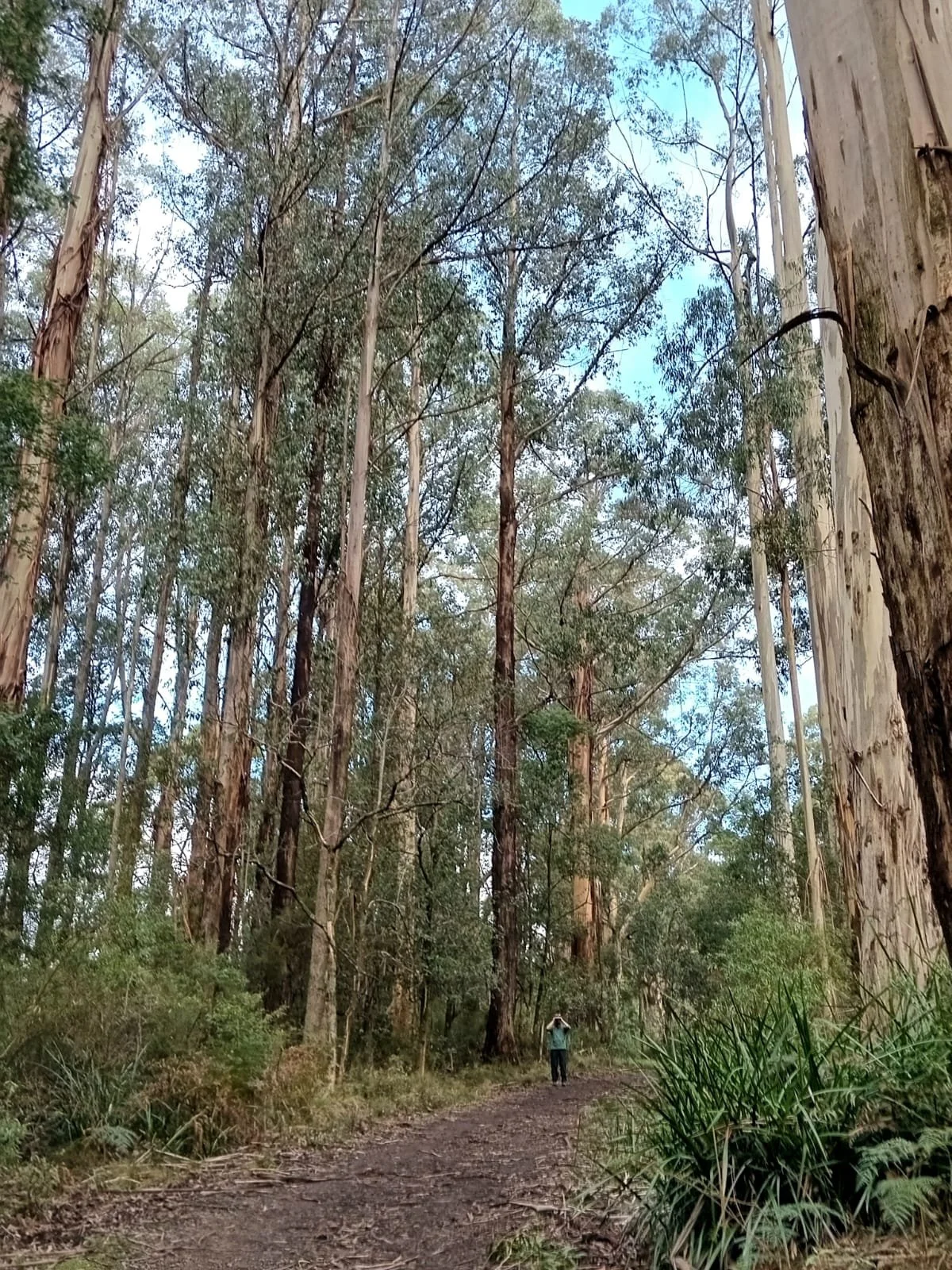
Patrick amongst some younger Mountain Ash trees
What words of wisdom do you have to impart to other gardeners?
Get comfortable killing your plants, learn to enjoy and appreciate it. Try new things. Stop working in the garden every now and then and just be in it. DON’T GROW MINT UNLESS IT’S IN A POT.
What are your most favourite tools to use when gardening?
Nothing beats the crisp feeling of the cut from sharp, clean secateurs. Otherwise the tool I’ve used the most in the garden is just my bare hands. I don’t like wearing gardening gloves since I want to feel everything, which means I wash my hands more and need to take care of the skin so it doesn’t crack and cut. Maybe that means Vitamin E cream is my best tool. Recently I used a pole saw a bit at work and that’s always fun.
How do you think we can encourage, inspire and support more people to be gardeners?
We need to understand if gardening isn’t accessible to someone, why isn’t it? Physical access barriers is the easy part. A lot of Australian’s can’t get to the gardening in the first place because of a lack of resources. Being able to garden for leisure is a privilege a lot of people don’t have. Time, money, information access ... in my world I see people who can’t garden because they’re isolated, funding disappears, they’re time-poor because they’re full-time carers, no language access, they’re being excluded for some other reason, systemic barriers, mental health support isn’t there, etc. It’s usually not about the gardening itself. If you can garden for enjoyment and you see someone else who can’t, think about what you have that they don’t.
All words and photos supplied by Patrick Wain, with sincere thanks.